
Question: How many Calvinists does it take to change a light bulb?
Answer: None as it’s up to God to regenerate the elect bulbs which can only sit in the dark hoping.
Hey! It’s a little bit funny. And, come on, it’s good to laugh!
Question: How many Calvinists does it take to change a light bulb?
Answer: None as it’s up to God to regenerate the elect bulbs which can only sit in the dark hoping.
Hey! It’s a little bit funny. And, come on, it’s good to laugh!
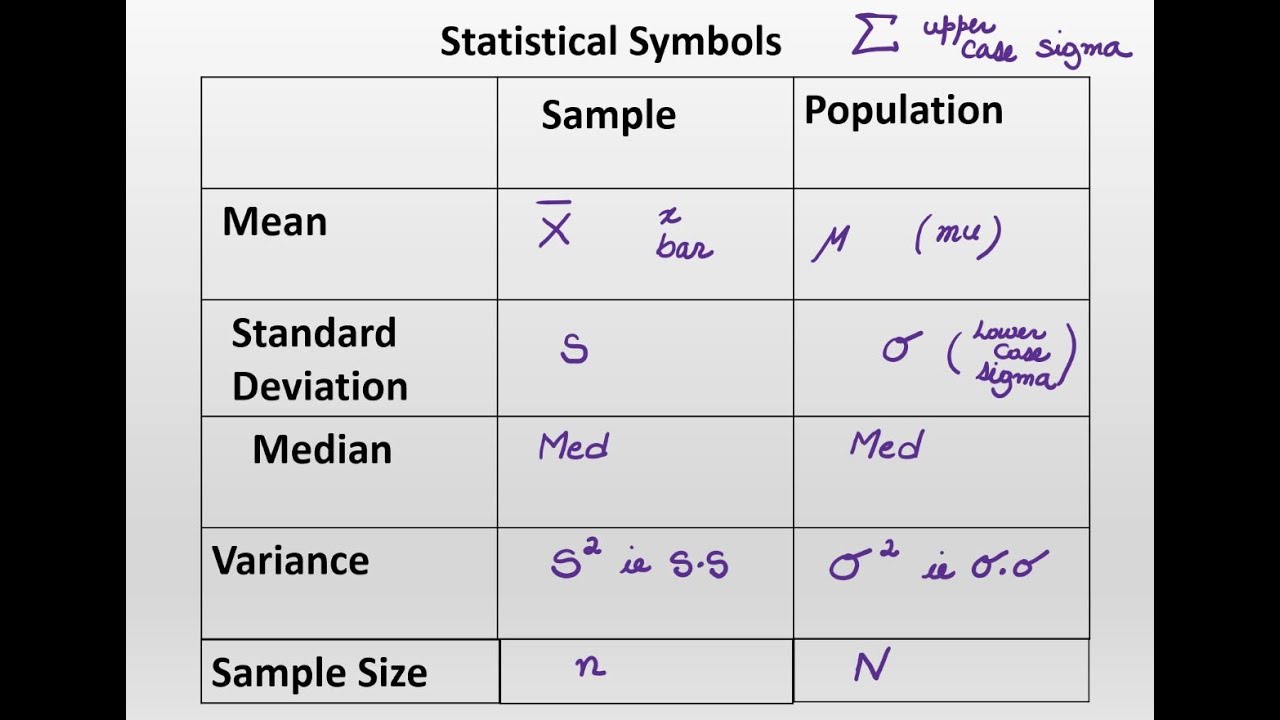
I stated to a Calvinist that per the doctrine of election, it was a small percentage of people that God saves. The next thing I heard, “Prove it.”
Continue reading “Calvinist Admits God Chooses to Save Only 4% of All People”
Mrs. Robinson posted in a FB forum:
[A] common misconception from [everyone in this FB group] is that a Calvinist won’t allow their children to sing “Jesus Loves Me” because, after all – He may not. That a person who holds to the doctrines of grace shares the gospel with their children like this, “Well, you may or may not be elect so, [it may be best to wait and see whether you’re one of God’s chosen unto salvation].” We teach our children the gospel according to Scripture. The gospel is that sinners can be reconciled to God through faith in Jesus Christ. It’s a great relief and comfort that [we Calvinists parents] can’t do anything to mess up [our children’s] salvation. We teach them, pray for them and trust God with their souls. After all, [God] is far more merciful than we could ever be.
I responded: My friend, do you not see the inconsistencies in your statement above how [God] calls all men to repent and yet only those who the Father has given, and the Spirit draws” [will be] saved? This coupled with the logical inferences of compatibilism wherein it’s God who has ensured (through the Calvinistic teaching of divine determinism) that only a very few of his chosen ‘elect’ people respond affirmatively.
Continue reading “Logical Inconsistencies and Unconditional Election – the Salvation of Mrs. Robinson’s Children”
Someone defined compatibilism as a reconciliation of the theological proposition that every event is causally determined, ordained, and/or decreed by God in conjunction with the free will of man. Well, that makes about as much sense as when I’d take my toddler to a shopping mall, put her down and let her roam “free”. I was in fact directing her to the next store I wanted to shop at. It’s a non-sequitur within compatibilism that people make free-will choices in anything as very event and action has already been predetermined by God and for his reasons alone.
Within the doctrines of Calvinism, nothing happens which hasn’t been causally determined, decreed or ordained by God. John Piper references the “no maverick molecule” concept wherein if any molecule or spec of dirt only moves through the air as it does because God determined it would. Someone came up with the nice little acronym “EDD” (exhaustive divine determinism) to best express this concept in which God causally determines every single thing and nothing happens which He didn’t determine would happen.
Continue reading “Compatibilism and Christian Thought – It Bugs Me”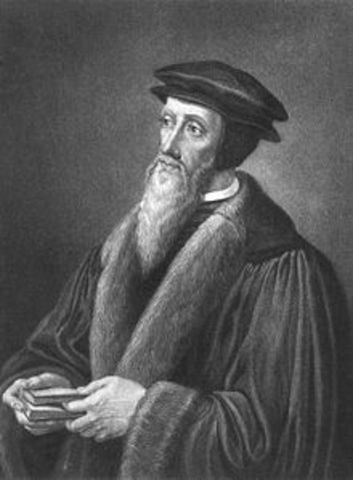
The more of John Calvin’s writings and teachings I see the less I like them. His emphasis as to sovereignty and predestination over love ought to tell us something about the man himself. But I’m not sure just what that is. I can’t imagine that he was a happy fellow and a delight to be around. I’m aghast how Calvinists can define the nature and character of God through the writings of Calvin – which makes God out to be arbitrary, capricious and devoid of love over all that God created. At least, that’s my take. I wonder if the (literally) years that Calvin spent isolated and alone while writing his Institutes of Religion brought about a sense of isolation and loneliness in which he imparted his own anger towards his fellow man and attributed that to God. Who knows? Below are some quotes I’ve compiled. That so many find truth within Calvin’s words and the subsequent doctrines aka TULIP somehow seems distressing.
Continue reading “When John Calvin Speaks, Do Calvinists Listen, Comprehend and Respond?”
Given the previous post where John Piper seems to be wondering whether he is saved, I thought it would be good to repost this article:
Every Calvinist I know believes that they’re part of Team Elect. But, interestingly enough, John Calvin writes in his Institutes of Religion 3.2.11 that God reveals himself not just to his elect, but also to the reprobate. Per Calvin, God instills within the reprobate a sense of God’s goodness and mercy to the point where the reprobate believes God loves him, has mercy for him and will save him However, the reprobate is only enlightened with a present and not eternal sense of grace. As such, any conviction the reprobate experiences doesn’t lead to salvation.
Continue reading “Does a Calvinist Have Assurance of Salvation?”
John Piper, perhaps the de facto articulator of Calvinist doctrine today stated at the Ligonier National Conference in 2000, “No Christian can be sure he is a true believer. Hence, there’s an ongoing need to be dedicated to the Lord and deny ourselves so that we might make it.” I find it amazing that, so far as I know, no one corrected Piper that per Calvinist doctrines, it is God who does the choosing unto salvation from the foundation of the world and that salvation is unconditional wherein actions and behaviors have nothing to do with it?
What a horrible aspect of Piper’s Calvinism – being unsure of one’s salvation, sensing God dangling the “carrot” of salvation only to pull the rug out from under you just before you depart to eternal destruction because you failed to deny yourself sufficiently that you “might make it”! Please! Is this Piper’s actual belief? Is Piper expressing concern as to the assurance of his own salvation?
Continue reading “John Piper: “No Christian Can Be Sure He’s a True Believer””
I’m currently re-reading John Piper’s book, A Sweet and Bitter Providence and am reminded that Piper is a hard determinist. I’ll likely be posting some thoughts on something Piper calls “the sovereign bullet’ in the near future. In any event, Piper has previously made deterministic statements including:

Calvinists often site Eph 1:4 as “proof” that God chosen certain individuals from “the foundation of the world”. As I looked at the wording of the verse, it occurred to me that if the prepositions are removed, then the verse essentially distills down to God deciding that we were to be holy and blameless before he created the world. Calvinists often site Eph 1:4 as “proof” that God chosen certain individuals from “the foundation of the world”. As I looked at the wording of the verse, it occurred to me that if the prepositions are removed, then the verse essentially distills down to God deciding that we were to be holy and blameless before he created the world.
Well, it didn’t take long before I was chided (albeit, gently) with the following comment: “Ummm, [the word] ‘to’ is also a preposition [and] if you remove all the prepositional phrases, [then there’s] no verse left! The idea that there is an end-result to God’s choice does not define in any way how God made the choice, or why God made the choice. [T]he basic facts we are left with are that 1) God chooses, and 2) those chosen will be made holy. [Eph 1:4] supports “Calvinistic” election more than it does not.”
Continue reading “Additional Thoughts on Unconditional Election”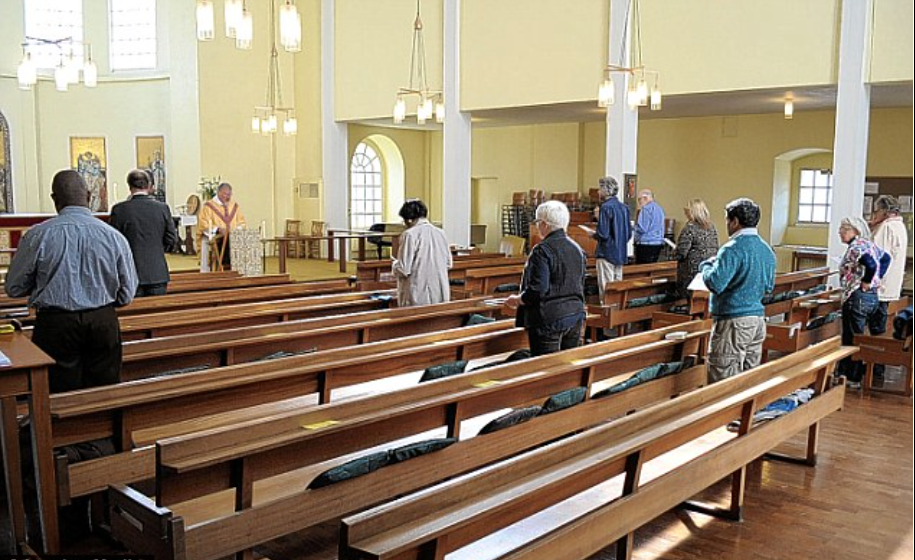
Just an observation … but in a Calvinistically leaning church I used to attend, the Sunday population has dwindled from around 500 (in two services) to less than 200 over the last seven or eight years. No doubt there are a number of reasons that people leave one church to start attending another. Or they stop going to church altogether.
COVID has certainly played a part in many people no longer attending church. Those people who left and haven’t returned due to COVID are perhaps the weakest of Christians.
I suspect many people stop going to church for ‘physical’ reasons such as being dissatisfied with the preaching, the music, the overall stage presence, the seating, children’s programs, how fresh the coffee is, the drive-time to church, how welcome they’re made to feel or any number of other similar reasons.
But I suspect that churches are primarily concerned with the ‘spiritual’ reasons as to why folks are leaving. And that’s what I’ve tried to compile below.
Continue reading “A Dozen Reasons People Leave Calvinism in Particular and Christian Faith in General”
