

An Approach to Knowing God’s Will

diceThis post came about as a response to a ten page term paper written by a friend. I regret I’m unable to link to the paper in which is presented a defense of knowing specifically how God is leading each and every individual. Although not specifically stated, the overtone from my Calvinist friend is that God not only leads believers, but that he also leads and directs non-believers.

The three main themes from An Approach to Knowing God’s Will is that God:

  1. Has a will for all people
  2. Has a will for all Christians
  3. Has a specific will for each Christian

I’m in agreement with the first two parts that God has a will for all people which is – to be saved. Obviously, even if I’m not a Calvinist. I’m also in agreement that God has a will for all Christians – which I’d refer to as the “moral will”. The book of Proverbs & Rom 12 immediately come to mind as to general conduct for believers (and, I’d also add, non-believers, too).

The third point that God has a specific will for each Christian is our main difference. Your conclusion states that the Spirit leads specifically “as to the type and place of service.” In addition, you add that God leads and directs individuals to any number of other things including the church one should join, what one’s spiritual service should be, whom to marry, which house to buy, what car to purchase, etc. After all, “[God] knows what’s best for me.”

I find it ever curious that the Bible is replete with general principles and apparent guidelines for (what I believe to be) the express purpose of decision-making. It seems self-evident that God wanted us to have an “instructional guide” to make wise decisions. To which, we’ve been given the Book of Proverbs. By using biblical principles, I can make wise – and I would even say, godly decision as to any number of things – personal, financial or moral.

I don’t believe that I’ve been led to a particular church. In fact, we’ve attended five different churches in the 32 years we’ve lived in the Twin Cities. The reasons we left a given church are perhaps not germane to this discussion. However, suffice it to say that different churches have appealed to me at different times in my life. Ultimately, my criteria for a church is rather simple:

  1. Do I like the overall configuration of the service?
  2. Is the church evangelical in nature?
  3. Can I be “fed” or otherwise grow spiritually?
  4. Is there a ministry where I can serve?
  5. Is the church within reasonable proximity to where I live?

Lastly, as to what line of work (spiritual service) – how’s ‘bout whatever’s within your “bent” or natural abilities? For me, I can’t work with kids. I hate the chaos and occasional talk-back and discipline issues. On the other hand, I have no fear of walking up to someone and introducing myself. I must have the gift of hospitality. To which, I’m a greeter. My “job” each Sunday is to intentionally seek out people I don’t know for the express purpose of welcoming them. 

Decision-making is often difficult and stressful if for no other reason than there is incomplete information. And, the full impact of decisions can’t always been known. Obviously, some decisions made are better than others. However, as I look at some of Paul’s writings, it’s apparent that God allowed Paul to freely make decisions. Below are some instances where Paul exercised decision-making. I’ve included a paraphrase for the issue/concern at hand:

  • Phil 2:25 (I think it’s a good idea)
  • 1 Cor 16:3-4 (If it seems the right thing to do)
  • Acts 6:1-7 (We need to do something about this)
  • Acts 15:24-29 (People got together, debated, decided, and acted)

A letter sent from our church’s board of elders to the congregation illustrates Paul’s examples: 

After evaluating recent giving patterns to the general fund, the elders have determined (emphasis mine) that we must take a decisive step toward “right sizing” our current staffing numbers.

Clearly, the board didn’t “wait upon the Lord”. Nor did the elders indicate any divinely received indication as to whose employment should be terminated. Rather, they have given this difficult decision its due consideration and, I believe, exercised care and concern by way of:

  • Analysis – “After evaluating recent giving patterns”
  • Collective wisdom – “After much prayer and discussion”
  • Decision – “We must take a decisive step”
  • Reflection – “This was not an easy decision”

Nowhere are there passages where Paul explains such things as open doors, closed windows or otherwise how God guides individuals. Nor do I find a “method” by which one can ascertain the “will of God”. Instead, Paul describes in various places just what comprises the “will of God”. Interestingly enough, there’s no ambiguity or uncertainty. Romans 12 is a clear and concise outline of God’s will for how we should live:

Rom 12:1      Dedicate your body to God

Rom 12:2      Be transformed. Put on new man

Rom 12:3      Don’t overestimate yourself. Rate your own ability soberly

Rom 12:6-7  Use your gift and give yourself to it

Rom 12:9      Love with sincerity

Rom 12:9      Hate evil and turn from it

Rom 12:9      Hold fast to that which is good

Rom 12:10     Love one another. Prefer one another

Rom 12:11     Never lag in zeal and earnest endeavor

Rom 12:11     Be aglow with the spirit, serving the Lord

Rom 12:12     Rejoice and exult in hope

Rom 12:12     Be steadfast under pressure

Rom 12:12     [Be] Patient in suffering

Rom 12:12     Constant in prayer

Rom 12:13     Give

Rom 12:14     Bless those who persecute you

Rom 12:15     Share others’ lives, give of yourself

Rom 12:16     Live in harmony – adjust

Rom 12:17     Repay no one evil for evil

Rom 12:17     Be honest and above reproach. Avoid the appearance of evil

Rom 12:18     Live at peace with everyone

Rom 12:19     Avenge not yourself

Rom 12:20     Do good to your enemies

Rom 12:21     Overcome evil with good

In conclusion, I don’t see the Bible teaching that God routinely directs the decisions we make. That said, I would agree that it has been the rare exception when God directly intervenes with someone i.e. Paul’s Damascus Road experience. And even for those actually guided directly by God, so far as I can tell, that guidance appears only related to evangelism. To paraphrase Garry Friesen from his book, Decision Making and the Will of God: Any decision made that does not violate God’s moral laws is acceptable to God and even brings about honor and glory to him.
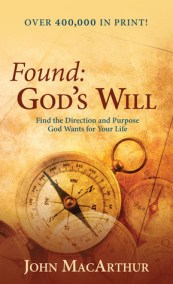
Found: God’s Will by John MacArthur

FoundThis is a book written to help Christians understand God’s will in the life of the believer. The first 66 pages list out numerous scriptural references showing five elements to God’s will for one’s life – which include:
  1. Saved
  2. Spirit-filled
  3. Sanctified
  4. Submissive
  5. Suffer

After which, paraphrasing MacArthur – if you’re doing all five of the basic elements and wanting direction for something, well, do whatever you want [68]. MacArthur explains that if those five elements of God’s will are preeminent in your life, then you can trust that according to Ps 37:4, God is giving you the desires of your heart.

MacArthur goes on, 

You may bounce off a lot of closed doors, but that is God’s way of forcing you into His open one. [74]

Hmmm – time to pause. In my estimation, at least, the belief that God uses “open” or “closed” doors to direct us is an easy way out of the responsibility of decision-making. Personally, I find decision making hard. For me, it’s much easier to be the “worker-bee” on the manufacturing line. On the other hand, it’s all together a lot more complicated (and difficult!) to be responsible for decisions made to ensure that the manufacturing line is operating at maximum efficiency. Hence, “decision makers” [aka managers] typically earn more money. It’s almost as though people aren’t necessarily paid for the work they do. Rather, people are compensated by the kinds of decisions they make. Therefore, the greater one’s responsibilities and magnitude of decisions made, the fatter the paycheck – at least on average. But, perhaps that’s a topic for another conversation.

Still, the concept of “open doors” and “closed doors” is foreign to me. My own understanding of verses within the Bible coupled with life-events has brought about numerous times when differing counsel, conflicting scriptures, hard to understand circumstances and even the good-willed intention of other people provide, at best, ambiguity with regard to personal direction.

Ultimately, we make the best decisions we can with the knowledge we have at the time. We can ‘decide yes’ or ‘decide no’. And then, like it or not, we have to deal with what is best described as the natural occurring outcomes (or consequences). And, those naturally occurring consequences can be good, bad or even indifferent. Lots of examples come to mind i.e. purchasing a house, investing, going back to school, taking a new job, whom to marry, having children, moving to a new city, etc. All too often I see Christians feeling duped or otherwise “beating themselves up” over decisions they’ve made wherein they suffer from the “I must have missed God’s will” syndrome. The ironic commonality amongst so many believers, however, is the belief that if something works out well then it must have been God’s will. And conversely, if something didn’t work out so well, then the poor schlep feels as though God is bringing about punishment for their going around God’s will. To me, this is nuts!

I think we can trust the writings of Paul in Rom 12:1-2 that:

  1. We are to present our bodies as a living an holy sacrifice
  2. This is our spiritual service of worship
  3. We are not to be conformed to this world
  4. Rather, we are to be transformed by the renewing of our mind
  5. So that we may prove what the will of God is

Subsequently, experiencing God’s will in one life is not complicated. We are to:

  • Work hard
  • Live in peace
  • Warn those who are idle
  • Encourage the timid
  • Help the weak
  • Be patient with everyone
  • Don’t pay back wrong for wrong
  • Be kind
  • Be joyful always
  • Pray continually
  • Give thanks in all circumstances

Because [all of the above] is God’s stated will for us (1Thess 5:12-18).

I respectfully disagree with MacArthur that God is using the experiences in our lives to shape us into his will [75]. I remain unconvinced that God has a ‘blueprint plan’ for each person’s life. Nor do I believe that God reveals that ‘blueprint’ through open or closed windows. I have no doubt as to Paul’s account of his Damascus Road experience. However, such events are exceedingly rare within the Bible. To which, where are the verses teaching how to interpret and understand circumstances?

In conclusion, God wants our hearts and our minds. The details relating to what I decide (or don’t decide) will take their own course and therefore I don’t need to concern myself with specific outcomes or trying to figure out if something is (or is not) his plan via open or closed doors. So, simply put, God’s will is living our life as he intends and making decisions that honor him. It’s not anymore complicated than that.

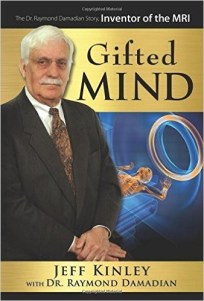
Gifted Mind

Raymond DamadianA recently published book entitled Gifted Mind is an interesting read about the life-story of Dr. Raymond Damadian. He is credited with having invented the MRI. A key element throughout the book is Damadian’s adamant belief that he experienced God’s intentional  leading into a “new truth” through the invention of the MRI. A quote on the back cover of the book is testament to Damadian’s belief:

To me, the highest purpose a man can find for life is to serve the will of God.

As becomes obvious in the book, this will of God is not a general will of salvation. Rather, the will of God is personal and specific for each person.

With an admitted bias towards Open Theism and a completely different understanding of the nature of God’s will in the life of the believer, I tried to read Gifted Mind in an open and honest manner. Aspects of Damadian’s life and the invention (along with the explanation) of how MRI differentiates K+ (potassium) and Na+ (sodium) structures of normal and cancerous cells are fascinating. There’s no doubt that Damadian possesses a ‘gifted mind’. And, throughout the book, Damadian comes across as a humble guy dealing with day-to-day difficulties and coping as best he can.

As noted above, an important element in the book is that God gives or otherwise doles out specific knowledge to particular people at given times throughout history. If that’s true, it could reasonably be argued, then, that there’s a basis to believe God has intentionally withheld medical advances which would have otherwise helped or benefited people. And, as one who struggles with Calvinistic doctrines, I unfortunately find such a concept of God benefitting some but not others consistent with the Calvinist teaching of election wherein only some people are created for salvation and others are to be reprobate.

Damadian’s scriptural references are, to me, poorly interpreted and only vaguely tied to applications he puts forth. Some examples include:

  • John 14:6 I am the way and the truth and the life. No one comes to the Father except through me. [10-11]
  • John 8:32 Then you will know the truth, and the truth will set you free. [11]

Damadian uses these verses to show that God is the author and creator of all truth and that God ‘allowed’ (or chose) Damadian to unfold a ‘new truth’ – namely, develop the MRI. To me, the very clear intent of these verses have to do with salvation and not the development of a high-tech widget.

  • Prov 16:9 The mind of man plans his way, but the Lord directs his steps. [164]

The clear inference is that God determined that Damadian was the one who would bring MRI into the world at a certain point in time. Can I then infer from Damadian’s understanding of this verse that God also directs the steps of the wicked? I personally don’t think so. However, I would submit that God is able to ‘use’ man’s plan – and direct those freely chosen steps to that which God wants.

The book is replete with numerous and specific claims of God “directing Damaian’s steps” i.e.:

  • “Astounded by the coincidence” [89]
  • “I was meant to construct the first MRI” [91]
  • “I knew what God wanted me to do in that moment” [129]
  • “[The invention of the] MRI was the unfolding of God’s plan for my life” [164]

In spite of the number of claimed instances where Damadian believes God was “directing his steps”, however, I remain unconvinced. To which, I’m often troubled that good-willed Christians can have such divergent thought as to the nature of God’s will. Two books I’ve found which underscore that variance are:

  • God’s Will, God’s Best – Josh McDowell
  • Decision Making and the Will of God – Garry Friesen

McDowell’s book goes into detail as to using various “tools” such as circumstances and counsel in ascertaining whether something is indeed part of God’s will for one’s life. Friesen, on the other hand, believes that anything we do (or decide) that is not in conflict with Scripture is perfectly acceptable to God. Furthermore, Friesen encourages ‘Kingdom thinking’ such that should a decision be required between A or B, do that which will bring about greater glory for God.

I don’t doubt the difficulty as to the nature of the work that Damadian and his team did. However, it seems curious for one who’s adamant as to God’s specific leading to also express doubts about that leading and there are numerous examples where Damadian appears to doubt God’s leading:

  • Sought help from President Carter [96]
  • Chasing ‘ghost theories” [107]

To which, it’s unclear as to why in these instances (and likely many others) Damadian didn’t claim John 14:14 to ‘ask anything in my name’. [91]

In conclusion, I believe this book will likely enhance or otherwise confirm what one already believes about matters of faith and the nature of the will of God in the lives of believers. People who are comforted by God’s sovereign decree(s) over his creation will likely agree with Damadian being led by the spirit and periodic revelations of “new truth” (in this case, the MRI). For myself, I struggle with the overt generalization of scriptural references being applied to concepts and notions for which the writers had no intention. I did, however, enjoy reading the book and learning about this man. But ultimately, I find that this story is not compelling that God was indeed leading Damadian. And therefore, I am not convinced that this book provides compelling evidence that God has a specific will for believers.

Wanted: My Definition of Calvinism

I recently received an email which stated:

From time to time I lurk on your blog.  Interesting thoughts.  From what I read, however, I think there might be some weaknesses in your arguments.  It’s not that your logic is off, but I question some of your starting assumptions.

So here’s a challenge for you:  Define what you think Calvinism is.

Two ground rules:

  1. Make it short rather than long.  When you write things in your blog you’re using your stream-of-consciousness definition of Calvinism 90% of the time.  Not the nuanced points, just the primary points.  I realize something like this has plenty of nuance, but making it short forces you to stick to your fundamental ideas.
  2. Don’t look anything up or say what others think.  Once again, when you are writing for your blog you’ve got your definition in mind, not someone else’s.

Based on what I’ve read, my suspicion is that some of what you call Calvinism is not what most Calvinists would call Calvinism.  And thinking through that might help sort through some of the questions you raise.

Looking forward to your response.

Dear Lurker,

Thank-you for your interest in this blog. Your criticism is, I believe, a fair one. I do tend to write in a stream-of consciousness manner. I don’t know that I intend to, per se – and I don’t know that it’s bad, either. However, when I read or hear things, for better or worse the way I “process” through and come to some understanding of thoughts, ideas or concepts is doing what I do.

Nevertheless, I appreciate your suggestion to provide a definition. And so, here in a nutshell is my definition of Calvinism:

  • God predestines and controls everything for His glory

There’s a strong temptation to dig up a bunch of information that I believe would support that definition and also to provide examples of statements of other people. But following your suggestion – I won’t. However, I would like to simply state that there are numerous manifestations of Calvinism that (to me, at least) naturally come about from this definition including salvation only for “the elect” and an inability of God’s creation to exercise free will. In my own mind and experience, these manifestations have led to a perception that God intentionally limits His love to only a very select few and God ‘wills’ evil. Lastly, I’ve experienced terrible frustrations pertaining to assurance of salvation. Am I saved? Or, am I simply going through “Christian motions” on my own? Or worse, is God intentionally deceiving me?

I welcome your reply.

Bob

Believing God’s Sovereignty in Sickness – and in Health, too?

I am saddened to hear of Joni Eareckson Tada’s breast cancer and only wish her the very best with her surgery and following treatments.  In the video, Joni said:

Our afflictions come from the hand of our all wise and sovereign God.

We believe that God can and does heal.

Given her own words, I sense that doubt is revealed and a lack of confidence in God’s ability to heal is displayed because Joni has sought out medical assistance through surgery and (presumably) subsequent chemotherapy and/or radiation.  According to Joni, it was God who determined that she was to contract cancer.  The question I seem to ask of Christians who make the assertions that God inflicts some with life-threatening disease (or any other kind of malady or calamity) is; do Joni’s actions in seeking medical treatment indicate that she really does rest in her stated view of God’s sovereignty and God’s will in the matter of her healing?

Update: From the latest video and posting on her site above, it’s good to hear that Joni appears to be doing well after surgery.

Update (7/6): Joni continues to recover after her surgery.  I’ve enjoyed reading the comments that people have posted.  Although I have my doubts that it was God who brought about cancer within Joni, it is apparent Joni that has peace about the whole situation and her faith is a testament to God working out all things for the good of those who love him and are called according to his purpose (Rom 8:28)

Trying to Understand Calvinist Thought & Logic Related to the Will of God

This post came about from comments written by myself and two others elsewhere on this blog.  For the sake of clarity and to keep a post on a given topic, I’ve decided to bring those references and comments under a new post.

My previous post on “Calvinitus” was an attempt to show my struggle with Calvinist doctrines infusing themselves and otherwise coloring (maybe blinding?) my perception of God.  However, after recently watching an old movie about Lou Gehrig, Pride of the Yankees (1942), it occurred to me that perhaps Calvinists also struggle with the reality of their own doctrines – particularly unconditional election.

Most people probably associate Lou Gehrig with amyotrophic lateral sclerosis (ALS), often referred to as “Lou Gehrig’s Disease”.  ALS is an insidious progressive neurodegenerative disease affecting the nerve cells in the brain and the spinal cord for which there’s currently no cure.  I have no idea as to what Lou Gehrig’s religious beliefs were.  If I may, however, let’s assume Lou Gehrig was an ardent Calvinist.  There’s a scene from the movie, where Lou Gehrig learns that he has ALS, which goes something like this:

Lou: Give it to me straight, doc.  Is it three strikes?

Doc: Yes, Lou, I’m afraid so.

Lou: Well, I’ve learned something over my life.  You can’t change the call of the umpire.

Calvinists I know believe that God ordains all things.  That being true, then Lou Gehrig’s “Calvinist” example is one of humbling accepting God’s will when he’s diagnosed with ALS because of his realization that “you can’t change the call of [God]”.  Lou further exemplifies his submission to God’s will when he says during his retirement speech, “I consider myself to be the luckiest man on the face of the earth.”

It was interesting, then to find a story (here) where a Calvinist man goes to visit his grandfather in a hospital.  Also present at the hospital are his grandmother and a Eucharist minister.  The Calvinist man is upset that the Eucharist minister is offering his grandparents feel-good prayers, pseudo-repentance and communion.  The Calvinist man was struck by the wretchedness, hostility, false assurance and blasphemy of the Eucharist minister’s actions and his grandparents attitudes toward God.  The story continues that later, and without success, the Calvinist man tries to convey the gospel message to his grandfather.

It surprises me that Calvinists appear blinded by the logic inherent within their own doctrines.  According to the doctrines of total depravity and unconditional election, God determines who will be saved and conversely who will be eternally lost.  Therefore, why is this Calvinist man dismayed at his grandparents or the Eucharist minister?  God hasn’t elected them.  They’re toast.  The Calvinist man understands that no witnessing, no praying, nothing the Calvinist man could do is going to change what God has sovereignty decreed.  As such, I submit that the Calvinist man’s frustrations towards his grandparents and the Eucharist minister are misdirected.  Consider:

  • The Calvinist man believes God has predetermined the decisions his grandparents have made.
  • God, however, has not chosen to save the Calvinist man’s grandparents.
  • The Calvinist man is dismayed that his grandparents are not elect.
  • And, the Calvinist man realizes that because God is in control, there’s nothing he can do.
  • As such aren’t those feelings of loss and separation related to his grandparent’s eternal destiny directly attributable to God’s sovereignty in the matter?
  • The grief the Calvinist man displays would seem (to me at least) to indicate a desire for God to change the inevitable outcome.
  • Therefore, the Calvinist man is in reality opposed to God’s will in this matter.  And if we’re not in favor of some act or condition, then by definition we’re opposed to that very same thing.

What I don’t see from the Calvinist man in this story is the humility exhibited by Lou Gehrig.  Wouldn’t the Calvinist man, if he truly believes in his doctrines, say something to the effect of, “I thank God for his sovereignty and for having blessed me with the greatest grandparents on the face of the earth.  I hope and pray that God may change my grandparent’s attitudes toward himself.  But I willingly accept God’s sovereign will and know that even my grandparent’s eternal separation will bring glory to God if only through his perfect wrath.”

That’s just a story some might argue.  Fair enough – but I think it ties in well to an MSNBC news story (here) of a young Calvinist pastor, Matt Chandler, currently undergoing treatments for brain cancer.  After reading the story, here are the comments I made to my good friend and ardent Calvinist, Mike:

Is there not something incongruous between Matt’s statements versus his actions as related to Calvinist thought and logic regarding the will of God?

“Lord, you gave [me cancer] for a reason.”

[Matt] is praying that God will heal him.

Whatever happens, [Matt] says, is God’s will, and God has his reasons.

As I understand Matt’s statements, he’s as much saying that God ordained him to contract brain cancer.  However, according to Matt, that doesn’t mean waiting for fate to occur.  Rather, it means fighting for his life, and to that end, Matt is undergoing surgery, radiation and chemotherapy.  I hope this question doesn’t come across as belittling.  However, if Matt truly believes God gave him cancer, then why doesn’t Matt have the faith to accept the cancer along with the significant potential of him dying and leaving behind his wife and two young daughters?

From reading the article, I sense Matt believes that God could cure him without all the standard fare of cancer treatments?  Yet, Matt appears to have decided that it’s best to undergo all of the treatments.  Isn’t Matt in essence saying, “Dear Lord, I know that if it’s your will to cure me, I’ll be healed.  No if’s, ands, or or’s about it.  Now, please don’t be angry at my lack of faith – but just in case, I’ll start all these different treatment options because maybe, just maybe, it’s your will that I’ll be healed through one of them.  Okay?”

Honestly, this seems to be more of the thought process Gideon used.  In this case, Matt seems to be hedging his “faith-bet” by putting down sheepskins of surgery, radiation and chemotherapy in order to ensure that all the bases are covered – and all the options for God to use are available .  Is Matt showing his faith?  Or, is Matt showing his desire to live irrespective of what God may have ordained?

With regret, I say that this appears to be somewhat of a false-faith. All the Calvinists know I emphatically emphasize God’s sovereignty and his being in control of everything in our lives.  And yet, when confronting an obvious life-or-death situation such as cancer, I’ve NEVER known anyone who was willing to sit back, praise God for the cancer (or any other serious or life-altering disease) they contracted, and look forward to their death.  Granted, I’ve only known of a few people who’ve dealt with cancer and the like.  But irrespective of the situation or circumstance, no one I know (Calvinists or not) simply allows “God’s will” to occur.  Everyone employs some subtle theological argument that “maybe, just maybe I had better play it safe in case God might be leading in ‘this’ direction.”

By definition then (at least as I see it), this Calvinist pastor is fighting God’s will and in essence trying to wrest control of the end results from God (most likely his death from cancer) by undergoing treatments.  So, I’m curious as to what you think: is Matt is trying to take control away from and/or otherwise alter the sovereign will of God?

Seeking God’s Will?

All too often I’ve had discussions with people who are “seeking God’s will” about something.  Trying to think through how we one can ascertain God’s will, the thought of marriage came to mind.  On the one hand, God lays out a principle in 2 Cor 6:14 that we shouldn’t marry a non-Christian.  Within this clearly defined boundary of believers, God allows us to choose the one we like best if for no other reason than God didn’t provide an “instruction manual” as to how individuals should choose a mate.  It seems simple enough; God lays out a framework (his sovereignty) and we live within that framework (our responsibility).

Hasn’t God, through the Bible, given us everything we need to know him and live our lives according to his principles – his revealed will for our lives?  To that end, I can think of no better passage as to how Christians should live their lives than Rom 12.  I can conclusively state that it’s the will of God for me to:

  • Offer my body as a living sacrifice to God, Be transformed by the renewing of my mind, Do not think of myself more highly than I ought, Use my gift(s), Love with sincerity, Hate what is evil, Cling to what is good, Be devoted to one another, Never be lacking in zeal, Keep my spiritual fervor, Be joyful in hope, Be patient in affliction, Be faithful in prayer, Share with God’s people who are in need, Practice hospitality, Bless those who persecute me, Rejoice with those who rejoice, Mourn with those who mourn, Live in harmony with one another, Do not be proud, Be willing to associate with people of low position, Do not be conceited, Do not repay anyone evil for evil, Be careful to do what is right, Live at peace with everyone, Do not take revenge, Do good to your enemies, Overcome evil with good.

My conclusion, then, is that with their different gifts and talents, Christians have a lot of freedom in exercising how they live out “God’s will” in their lives.  So long as believers don’t violate what God has clearly stated as his revealed will, there shouldn’t be any reasons for Christians to worry about “missing God’s will”.

How Can I Know the [Personal] Will of God?

Below is a letter I wrote  after hearing a sermon on “How Can I Know the Will of God?”

Dear Pastor,

Perhaps I’m too logical in my thinking or somewhat of a doubting Thomas and need to mull over new ideas for them to take root in my life.  Such is the case with your recent sermon, “How Can I Know the Will of God?”  Your message was very clear that God has a specific “plan” for each believer and that it’s the believer’s responsibility to find out what that specific plan is.

You referenced Prov 3:5-6, which in your translation says, “And He will direct your path.”  The NIV I have says, “And He will make your paths straight.”  To me, there are substantive differences in these translations and subsequent interpretations to be derived.  You said we shouldn’t depend on our own understanding and yet we also shouldn’t “deny our own smarts.”  And, more than once you said, “You’ve got to trust even when it doesn’t make sense.”  How can one ever have confidence to know they’re doing the will of God if they can’t be sure the decisions being made are what God would want done?  Specifically, you stated, “He will guide you [referring to any number of things including] career, marriage, dating, and college so long as He’s Lord of all.”  I regret that I didn’t hear how it is that we can know when it is that God is guiding us.  In addition, because I didn’t come to Christ until later in life, does that mean I might have married the wrong person, have the wrong job, bought the wrong house, am raising the wrong number of children, etc?  And that makes me wonder, does God also have a specific will for children and teenagers?

I recently found and a book in the church’s library, Decision Making and the Will of God by Garry Friesen.  He references three separate aspects of the will of God which include:

  1. The sovereign will of God
  2. The moral will of God
  3. The personal will of God.

From his definitions, it seemed evident that you were referring to the personal will of God in your sermon and to that end, I’d be interested in your take of instances where Paul appears to make decisions without any obvious indication of seeking the Lord’s will:

1 Thess 3:1

Phil 2:25

1 Cor 16:3-4

Acts 6:1-7

Acts 15:24-29

Friesen would say that Paul was exercising wisdom and that in non-moral areas where there isn’t a Biblical command or principle, we’re free (and responsible) to make decisions that we think are best.  Do you agree with this?  Are there other books you’ve found helpful in determining the personal will that God has for a believer?

Certainly throughout the Bible there are instances where God has led individuals.  However, it’s my sense that direct guidance was the exception and not the rule.  To that end, I’m asking if you think Friesen’s  conclusions regarding the “personal” will of God are correct:

  • In moral decisions, Christians are to live in obedience to the stated moral will of God.
  • And, in non-moral decisions, Christians are free and responsible to choose their own course of action.

Most Sincerely,

God’s Will and the Life of a Beauty Queen

I recently saw an on-line story (noted below) about Carrie Prejean – the former beauty pageant contestant who some think lost the Miss America contest because of her answer to a question regarding same-sex marriage.  Ms. Prejean is quoted as saying, “God chose me for that moment because he knew that not only would I be the one to stand up for Him and for the truth, but because He knew I was strong enough to get through all the junk that I’ve been through.”

God “chose” her because she would be “strong enough”  Uh, not so fast, please. First, Ms. Prejean’s answer that evening was a credit to her character and a testament to the values she holds dear.  Given that she was one of the contest’s finalists and the Miss America title potentially moments away, Ms. Prejean chose to proclaim God’s truth.  That said, I’m hard-pressed to believe that Ms Prejean’s situation is any different from anyone else being challenged on a point of morality.  The circumstances of a beauty contest certainly provided more notoriety because of the setting and who was asking the question.  However, all believers will have tribulations at various times in their lives.  It’s a promise that Jesus gave in John 16:33. 

Has God placed particular people in particular positions at particular times for His end-results?  The Apostle Paul, of course, had his Damascus Road experience. And Jesus chose those whom He wanted as His disciples.  That said, from my reading and understanding of the New Testament, it is only rarely that God chose certain people for certain tasks.  Furthermore, in my opinion, those instances only occurred during the early formation of the Church. 

Did God call Carrie Prejean to be a beauty pageant contestant?  I don’t think so.  If anything, all believers are called to holy living and to being a living sacrifice (Rom 12:1-21).  The NIV Topical Bible states: “[A]fter citing general principles for the Christian life, Paul gives practical guidelines on several specific issues; using properly God’s gifts to us, living a life of love, respecting human governments and using our Christian freedom compassionately and lovingly in disputable matters.  These issues remain vital in our lives today.”  The challenges that confront God’s standards and His desire for our lives are all around us.  We have a choice to make each time we’re confronted with something at odds to God’s stated will for our lives. 

This is God’s will for everyone: to be willing to exchange that which is temporal for that which is eternal. 

http://blogs.abcnews.com/thenote/2009/09/miss-california-wows-conservatives.html

God is large and in charge

A blog was set up on our church’s web site to allow for comments on the pastor’s summer sermon series.  There was one comment (which I’ve edited below for brevity) related to the will of God entitled “God is large and in charge” that I found interesting:

I look back and reflect on a time when God was real, present and in control of my life.  I must have fought with God every step of the way.  However, God began showing me that He had gifted me for a purpose and began the slow and painful process of changing my definition of success, and my trusting in Him alone for my security and well-being.  

During this time, God was present in every way I could have imagined.  He spoke to me through the Spirit (that still small voice), through other people, through the Word and even through the radio.  Everywhere I turned, I had confirmations regarding a life’s direction.  Everything from Bible verses reminding me God has plans to prosper and not to harm me (Jeremiah 29:11) and that God works all things for the good of those that love Him and are called according to His purpose (Romans 8:28) to radio songs about surrendering my life completely to God. 

I kept a journal of all the confirmations I sensed God throwing my way just so I could be sure and convinced that this was from God.  It’s almost comical the steps God used to get my attention.  It’s also incredibly encouraging to look back and realize God was there and really did have my best interests at heart.  I’ve never been happier in my life.  And, to top it off, God has met all of our financial needs and even most of our wants.  


I posted the following comment:

Your story of God’s leading is interesting.  However, the overriding perception seems to be that you’re trusting God based not only on the feelings you’ve experienced but also on the outcome.  Ultimately, you felt that this direction was the right thing to do and the outcome of that decision – being that you’ve never been happier and aren’t lacking for anything has validated that decision. Who am I to say that you’re not right?  Maybe God did lead you.  Still, I find it troubling that Christian cultists, or non-Christians for that matter, could use the same logic and draw the same conclusions based on their similar experiences.  This (for me) begs the questions, does God lead non-believers in the same way as you believe He has led you?  Perhaps that’s a question for another time.  Still, how is it that Christians today lay claim to God prospering them today based on Jer 29:11?  This is indeed what scripture says.  However, is this what scripture teaches?  The reference in Jeremiah is a historical event – God gave a promise to those whom Nebuchadnezzar had exiled from Jerusalem to Babylon.  Furthermore, there was a seventy-year period from when the promise was given to the promise’s eventual fulfillment.  It’s a little disconcerting to apply similar logic regarding Matt 27:5 – where Judas hanged himself.  In addition, I don’t think the Rom 8:28 reference supports your contention that God “willed” you into a specific direction as I don’t see the verse saying that God directs everything. 


Lo and behold, a reply from the original poster:

When I look back and see God’s hand in my life, I see two separate issues here – one related to His promise of provision, and the other related to a vocational direction.  Both were equally mind-blowing and joyful to me. 

While I certainly had financial fears about this vocation, that doesn’t mean that God’s financial provision since then is proof that taking this job was God’s will.  Rather, during this call, I was forced to confront the issue of whether or not I really believed I could trust God for my financial provision.  I was stepping onto new spiritual turf because of my upbringing and the resulting philosophies I carried with me about self-reliance and even definitions for success.  I placed my trust in God and gave up my illusions of control and still we have lacked for nothing.  This is proof of God’s faithfulness and provision and that we can trust him – not proof that this vocation was God’s Will.  Indeed, through prayer, scriptures, listening to the Holy Spirit and through council from trusted Christian friends I was sure of God’s will before I took the leap.  A “last act of desperation” I wrote of was more about my own insecurities and hoping that if it wasn’t what God wanted then He would close that door.  I knew I was called but I was afraid and reluctant to take what I felt was such a big risk with my life.  

The references to Romans 8:28 and Jeremiah 29:11 were of course written in different cultures and different audiences and situations.  However, I believe the same words of God are relevant to us today.  These scriptures are promises that God will provide for His people and will work all things for good.  Those scriptures God called to mind as I was considering whether I could really trust Him and step into the relative unknown I was facing gave me comfort that although I didn’t know the how or the when – everything would work out if I would continue to seek God in all things.  Thankfully, it didn’t take seventy years to see that God would provide for me.  To me those scriptures are not guarantees that we will see the results with our own eyes or that the “plans for good” are even how we would define goodness in terms of our own desired outcomes.  Rather, they’re a call to trust God, in all things, without necessarily knowing what His plan will look like.  For me, it took a transition into the unknowns of a vocation to grapple with these scriptures in ways that I hadn’t before.  The result of learning to trust God in this way is that we have had our faith encouraged and we never been happier.