What difference does it make whether one is an ardent Calvinist or, like me, has deconstructed and otherwise walked away from Christian faith? Within the last week I have lost two good friends – one to a car accident and the other to respiratory failure. One death was sudden and totally unexpected. The other was the result of a long and slow decline in health over time.
The truth is, I’m troubled by the discordant conclusions from well-meaning people in books, sermons and Bible studies. Everyone reads the same source material – the Bible. I’ve come to realize that my “faith-disconnects” aren’t, per se, with Calvin, Piper, MacArthur, Spurgeon, Sproul et al. Rather, these folks and countless others over thousands of years have wrestled with many questions and dilemmas that I’ve experienced. Many conclude and coalesce around Reformed Theology as being best able to explain and provide a framework to understand the nature and character of God and the world we live in. Others come to different conclusions.
The truth is, I’m troubled by the discordant conclusions from well-meaning people in books, sermons and Bible studies. Everyone reads the same source material – the Bible. I’ve come to realize that my “faith-disconnects” aren’t, per se, with Calvin, Piper, MacArthur, Spurgeon, Sproul et al. Rather, these folks and countless others over thousands of years have wrestled with many questions and dilemmas that I’ve experienced. Many conclude and coalesce around Reformed Theology as being best able to explain and provide a framework to understand the nature and character of God and the world we live in. Others come to different conclusions.
The truth is, I’m troubled by the discordant conclusions from well-meaning people in books, sermons and Bible studies. Everyone reads the same source material – the Bible. I’ve come to realize that my “faith-disconnects” aren’t, per se, with Calvin, Piper, MacArthur, Spurgeon, Sproul et al. Rather, these folks and countless others over thousands of years have wrestled with many questions and dilemmas that I’ve experienced. Many conclude and coalesce around Reformed Theology as being best able to explain and provide a framework to understand the nature and character of God and the world we live in. Others come to different conclusions.
The truth is, I’m troubled by the discordant conclusions from well-meaning people in books, sermons and Bible studies. Everyone reads the same source material – the Bible. I’ve come to realize that my “faith-disconnects” aren’t, per se, with Calvin, Piper, MacArthur, Spurgeon, Sproul et al. Rather, these folks and countless others over thousands of years have wrestled with many questions and dilemmas that I’ve experienced. Many conclude and coalesce around Reformed Theology as being best able to explain and provide a framework to understand the nature and character of God and the world we live in. Others come to different conclusions.
I have been a long time ‘lurker’ of the FB group, Soteriology 101 in which there is much discussion of “theological issues having to do with soteriology, the doctrine of salvation…specifically as it relates to Calvinism, Arminianism, Traditionalism or more specifically: Election, Predestination, Reprobation, Depravity, Atonement, Calling, Perseverance and the like.”
I’ve posted on this site and periodically have also responded to other’s posts. For the most part, my interactions support of non-Calvinistic perspectives with respect to the Doctrines of Grace. But it has recently dawned on me – there is no clear winner with respect to various posts, arguments and counter-arguments which has, to a degree, made me ask: “What’s the point?” Given the amount of variance that I perceive within Christian doctrines, I don’t know that it’s possible to, in essence, win an argument solely based on one’s understanding of the Bible. To which, I posted the below:
I can’t be the only one feeling distressed as to matters of Christian faith. Perhaps it’s only natural within such a forum as this that posts and presented arguments appear little more than a pro-wrestling cage-match. Each side has its requisite verses flung out in support of either Calvinistic or non-Calvinistic doctrines and beliefs. The arguments never cease and often get more pointed as time goes on and things escalate. Each side has ample ammunition (Bible verses) to lob into the other’s perspectives in justifying one’s beliefs. And there’s no obvious ‘winner’. Ultimately, I have to ask, where is the truth? Does the truth even matter? That something so essential as eschatology brings forth such angst within ‘believers’ (all of whom are reading from the same source material), how then are there not similar divisions on other tenants of Christian faith? Is it not reasonable, then, that Christian faith ultimately breaks down to one’s opinion if only because the truth(s) can’t be known – or at least aspects of those truths agreed upon? And given that Christians, even those with advanced degrees in theology and knowledgeable in the languages, culture and history of the Bible can’t agree upon significant doctrines, is it not then reasonable to infer that the Bible is insufficient on its in leading one to the truth? In short, after 40+ years of being a Christian, I’m finding find it difficult to believe that which I once held near and dear. And sadly, I’m sensing that forums such as this, along with other things, of course, are making it easier for me to relinquish that faith.
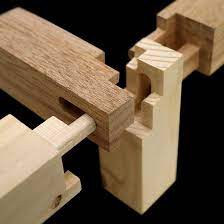
Of late, I’ve been trying to come up with an analogy to express why God may not be as intimately involved with his creation as many would like to believe. The other day as I was working with a table saw cutting some dados on a piece of wood – it hit! To which, I sense that the interaction of God and his creation is similar to that of a woodworker. Consider, the woodworker has created a beautiful table. A lot of time, effort, expense and care has gone into crafting that table. Out of “nothing,” the woodworker planted a tree, Years later the woodworker harvested that tree and cut it into planks. Eventually the woodworker cut those planks into something more manageable. With great care and precision, the woodworker then dimensions the lumber, squares-up and cuts all the pieces into their final dimensions. Complex joints are exquisitely fashioned and perfectly formed. Everything is then carefully fitted and glued together. Some sanding removes minor imperfections. The surfaces are prepared for finishing and when the finish is applied, the luster of the wood grain reveals the true beauty of the table.
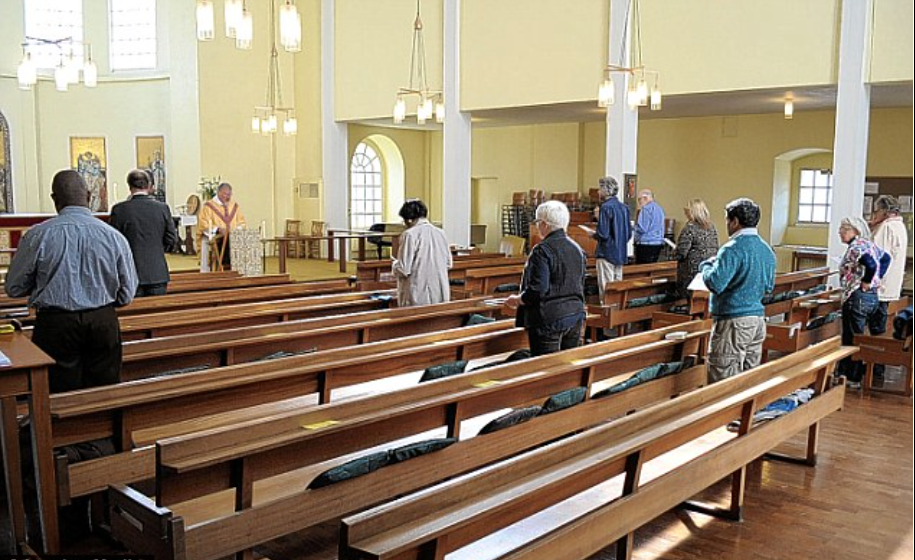
Just an observation … but in a Calvinistically leaning church I used to attend, the Sunday population has dwindled from around 500 (in two services) to less than 200 over the last seven or eight years. No doubt there are a number of reasons that people leave one church to start attending another. Or they stop going to church altogether.
COVID has certainly played a part in many people no longer attending church. Those people who left and haven’t returned due to COVID are perhaps the weakest of Christians.
I suspect many people stop going to church for ‘physical’ reasons such as being dissatisfied with the preaching, the music, the overall stage presence, the seating, children’s programs, how fresh the coffee is, the drive-time to church, how welcome they’re made to feel or any number of other similar reasons.
But I suspect that churches are primarily concerned with the ‘spiritual’ reasons as to why folks are leaving. And that’s what I’ve tried to compile below.
Mark 11:24 – Therefore I tell you, whatever you ask for in prayer, believe that you have received it, and it will be yours.
In his book, Celebration of Discipline, Richard Foster states, “Prayer catapults us onto the frontier of the spiritual life. Of all the spiritual disciplines, prayer is the most central because it ushers us into perpetual communion with the Father.” Although I’d heard many people praising God for all kinds of answered prayers as to health, grades, direction in life, seeing a relative become a Christian, etc, prayer never seemed real to me. The more I heard about answered prayers, the more I wondered whether prayers were really being answered prayers rather was the ‘answer’ the culmination of contributing factors with the most logical outcome being the final result?
I was recently corresponding with a good friend as to the deconstruction of my Christian faith. As is, this friend remains strong in his Christian faith. Using logic likely derived from a college philosophy class, he posited that when it comes to disagreements among Christians, one likely holds to one of the following positions:
1. No one knows which perspective on Christianity is correct.
2. Someone knows which perspective on Christianity is correct.
3. There is no way to know which perspective on Christianity is correct.
4. I don’t know which perspective on Christianity is correct.
5. I do know which perspective on Christianity is correct.




 Martin's Mercurial Musings