A Calvinist Response to Eph 1:4?

On a non-Calvinist FB forum, a Calvinist asked the question: If God allowed or permitted evil acts, the denial of the Gospel, & [election] based on divine foreknowledge, did God also decide the course of redemptive history before he created [the world]?

Another Calvinist quickly responded to the effect that many within this forum deny the Bible’s teachings (aka Doctrines of Grace). I asked for a specific example and received a litany of Bible verses in return. I inquired whether he’d like to take his first reference (Eph 1) and defend unconditional election. After a while and no response, I put forth my defense that Eph 1:4 does not support unconditional election and wrote the following:

Continue reading “A Calvinist Response to Eph 1:4?”

Determinism & God’s Nature and Character

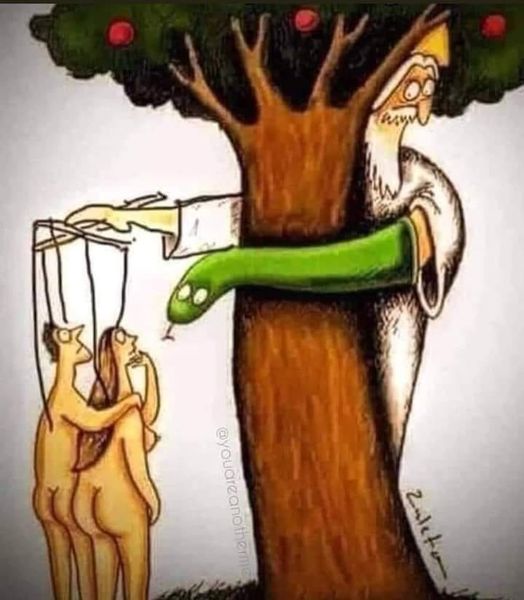
A Calvinist recently asked me why I have such antipathy towards the Doctrines of Grace. I responded how I find the teachings of determinism and unconditional election problematic such that they affect the very nature and character of God. I elaborated how it’s beyond me that a Calvinist can realistically say, ‘Well, it may be that God has chosen you to be reprobate. But don’t feel bad. God has intentionally doomed you for his glory.’

I went on to explain that years ago, and without realizing it, I’d been attending a Calvinist church. I’d gotten involved in a men’s Bible study where one of the books we went through was Jerry Bridges’ Is God Really in Control? I read through each page and continually said to myself, “That can’t be right” or “I don’t think so!” if only because theistic determinism is (to me) so incompatible with the entirety of Scripture. Why would God see the need to give us Proverbs if he’s determining everything that will happen?

Continue reading “Determinism & God’s Nature and Character”

Christian Faith – Truth Statements – Deconstruction

I was recently corresponding with a good friend as to the deconstruction of my Christian faith. As is, this friend remains strong in his Christian faith. Using logic likely derived from a college philosophy class, he posited that when it comes to disagreements among Christians, one likely holds to one of the following positions:

1. No one knows which perspective on Christianity is correct.

2. Someone knows which perspective on Christianity is correct.

3. There is no way to know which perspective on Christianity is correct.

4. I don’t know which perspective on Christianity is correct.

5. I do know which perspective on Christianity is correct.

Continue reading “Christian Faith – Truth Statements – Deconstruction”

Compatibilism – Sounds Nicer Than Determinism

Someone stated on a Facebook forum, “Anyone who believes that man’s will is entirely free, and that he can be saved by it, does not believe the fall.” He went on, “God is in control of our thoughts, our words, and our deeds, without making us robots or puppets! We are responsible for all of it!” Lots of verses were provided to justify his beliefs. However, if anything, I found his supply of verses justifying his pronouncements to be woefully lacking. And so, perhaps against better judgement. I responded:

I suspect our respective doctrines are altogether different – especially with respect to such things as Total Depravity, Unconditional election and Limited Atonement. Our doctrines are obviously based on our respective understandings from the Bible. To which, it would seem as though God has taught you things which are significantly different from what he’s taught me. Now, why would he do that? Unless maybe, just maybe, the tenants of determinism within Calvinism are fraught with error. And on that point, I can’t imagine you disagreeing with John Calvin who has written in his Institutes of Religion:

Continue reading “Compatibilism – Sounds Nicer Than Determinism”

Challenging the Calvinist Understanding

It’s been my experience that for Calvinists to comport with their doctrines, many verses can’t simply be read ‘as is’ but instead must ‘adjusted’ so that the meaning of a given verse can better fit their orthodoxy. A friend recently indicated that Calvinist soteriology requires a repeat of Genesis 3 in which the serpent says, “That’s not really what God said.” I found this thought fascinating if only because of the inference wherein Calvinism is a lie because, according to Calvinism, God does not love everyone. Further, according to Calvinism, Jesus didn’t die for everyone. And Jesus is neither the savior nor the propitiation for the sins of the whole world. So, in no particular order, below is a table of verses that seem to be saying one thing and in which the Calvinist puts forth a different interpretation than the simple reading.

Continue reading “Challenging the Calvinist Understanding”

Christian Faith … Going … Going … Gone

It’s been nearly four years since I’ve posted anything on this blog. In a manner of speaking, things have kind of broken down with respect to my Christian faith. There’re various reasons for this. But so far as I understand, Christian faith has become rather binary wherein it’s either right or it’s wrong. I can no longer incorporate what I’ve come to understand as diametrically opposed perspectives. This post, I hope, will shed some light as to where I find myself.

Continue reading “Christian Faith … Going … Going … Gone”

Christian Faith – Looking at a Picasso

Picasso

Christian Doctrine – Who’s Right? How Can We Know?

As much as I like to write, I don’t think of myself as good reader. Lists are much more readily absorbed. To which I recently found and watched an 8min video on the top ten things that Calvinists overlook with respect to John 6:37. These include:

10. “All” is treaded inconsistently

9. Not referring to church-age salvation after Pentecost

8. The “given” are the 12 disciples

7. Negative Inference Fallacy

6. Judas was both “given” and “lost”

5. Calvinists cannot prove he’s one of the “given”

4. Timing: No Holy Ghost, no death, burial, resurrection, etc.

3. The verses in the chapter that do mention “eternal life”

2. The stated purpose of the Book

1. The second half of the verse.

I am not familiar with Kevin Thompson, but the video can be found here:

I found this video informative and straight to the point in countering many of the typical arguments Calvinists have directed my way as to why they believe in TULIP in general and unconditional election in particular.

Scrolling down through the comments, one person referenced a rebuttal by no other than James White. White’s critique of Thompson begins at about the 1:08:00 mark.

Say what you will about Dr. White – he is passionate and articulate in his defense of all things Calvinism. And, although I find Dr. White to be annoying, arrogant and even condescending, it is not lost on me his defense of the doctrines he holds near and dear. To which, Dr. White puts forth (in my estimation, at least) a compelling hour long critique of Kevin’s Thompson’s list – point by point.

Well, not to just sit there and ‘take it’, Kevin Thompson puts out a lengthy refutation of Dr. White’s rebuttal. And at least from my perspective, Mr. Thompson takes apart Dr. White’s arguments very well indeed.

Suffice it to say, then, that the point-counterpoint of Dr. White and Mr. Thompson is on the one hand fascinating while on the other hand deeply troubling. I am impressed with the knowledge and skill both men employ and the detail in which both men counter each other’s arguments. In the end, I’m left with confusion and perhaps even a little despair. How is one to rectify the discordant views of those who profess Calvinism and those who don’t given that both sides present articulate and compelling arguments? Over the years, my Christian faith seems to have devolved into little more than personal opinion. At this point, I accept the historical personage of Jesus Christ. But, so what. Am I elect? Am I saved? Can there be assurance of salvation? I’m not sure. In the end, I reject Calvinism if only because, in my opinion, the nature and character of a holy God are laid to waste by God selecting very few people to join him in eternity while at the same time determining that the vast majority have no hope or even the ability to choose of their own volition and are subsequently cast off into the pit of Hell. Nevertheless, my antipathy towards Calvinism doesn’t make it wrong. And, too, having been told that my rejection of the doctrines of grace equates to me rejecting the gospel, well, maybe the conclusion is that I am indeed lost.

So, occasionally I search out and find something interesting such as a ‘top-ten’ list for ways to overcome the nemesis of my faith – Calvinism only to quickly discover (again!) that for every argument there is also a counter argument. In the end, perhaps I’m realizing that there is no answer. Unfortunately, if there isn’t an answer to the rightness or wrongness as to fundamental doctrine(s) emanating from the Bible, then how can one have any confidence regarding matters of faith? Unless, of course, one “feels” right about it. Perhaps the conclusion here is that Christian faith does break down to personal affinities – much like someone seeing beauty in a Picasso while someone else sees nonsense. Does it really matter?

The Proof of Calvinism; Reprobate Firewood

Alcohol BurningCalvinists often use Eph 1:4 as “proof” that God elects or otherwise choses specific individuals for salvation from “the foundation of the world”. The thought recently occurred to me that with the prepositions removed, the verse distills down to God deciding that we were to be holy and blameless before he created the world. That is, the verse is not talking about a specific individual’s salvation having been predetermined.

Before too long, I was chided (albeit, gently) with the following comment, “Uh, [the word] ‘to’ is also a preposition [and] if you remove all [of] the prepositional phrases, [then there’s] no verse left! The idea that there is an end-result to God’s choice does not define in any way how God made the choice, or why God made the choice. [T]he basic facts we are left with are that 1) God chooses, and 2) those chosen will be made holy. [Eph 1:4] supports “Calvinistic” election more than it does not.”

Irrespective of my failure to realize that the word ‘to’ is a preposition, I maintain that the premise of the verse/passage is not about the individual salvation of certain individuals. Rather this verse is instead acknowledging the bestowment of a spiritual blessing wherein God is taking the initiative to create holy beings via the cross because of his desire that none should perish. John Piper, in an article written several years ago, (noted below) says he embraces unconditional election because: 1) it’s true, 2) it makes us fearless in proclaiming God’s grace, 3) it makes us humble, 4) it gives impetus for compassion, kindness, and forgiveness & 5) is a powerful incentive for evangelism.

Piper rectifies (what must be) a “discordant verse” with his Calvinistic overview and modifies a clear teaching of the Bible to justify an element of TULIP. Again, Eph 1:4 says nothing about one’s individual salvation. Instead, we’re to be made holy. It baffles me that Piper (and so many others, too), with knowledge of languages, cultures and history derive an entirely different conclusion.

All of which begs the question – why do I get so worked-up over the notion of unconditional election? Of the five TULIP elements, unconditional election is the one that most bothers me. Micah Murray (noted below) has a differing perspective on unconditional election and states:

If unconditional election is true, then salvation is an arbitrary lottery.

If unconditional election is true, then God’s creation is an act of cruelty.

If unconditional election is true, then God cannot be trusted.

Murray’s sentiments are at complete odds with Piper’s perspective. Per Piper, “Before you were born or had done anything good or bad, God chose whether to save you or not.” When viewed through a Calvinist lens, I can’t help but think that God looks to be a rather random, mysterious and capricious deity as unconditional election clearly implies that it is God who picks the “winners” and “losers” – and for no obvious or apparent reason.

A while ago I tried to calculate the percentage of “winners” (aka elected people – see link below). Maybe my math is a bit off as I essentially used the approximate number of Evangelical Christians divided by the total number of people in the world. As is, the likelihood of one being “elect” is ~1%. A rather puny number. But, put another way, for every person born throughout the world, there is a likelihood of ~99% that the individual is NOT one of the elect! So, why would God intentionally create so many “losers” in the world? What is the point of intentionally casting 99% of people to Hell? Perhaps God’s love, grace and mercy are in fact exceedingly limited? As Murray says, “If God chose before the foundation of the world who He would save and who He would not save, then it is an act of unimaginable cruelty to create [all of those] people he has already chosen not to save.” Murry goes on to state that God is essentially creating human firewood with only one purpose – to forever stoke the flames of Hell.

I can already sense the incoming responses:

  • God’s ways are not our ways.
  • Our understanding is confined by time and space – God’s isn’t.
  • He is God.
  • He is sovereign.
  • He is in control.
  • He is the potter and we’re just the clay. He makes us into whatever “vessel” he desires.

The end-result, though, is that I find unconditional election to be a significant bastardization of the Bible’s teaching. Furthermore, Calvinism lays waste the fundamental nature and character of God – one who loves all (John 3:16) and wants none to perish (2 Pet 3:9). TULIP, in and of itself, has a logical construct. However, when I look at various scriptures purporting to support Calvinism, it so often appears that the context of the verse/passage often indicates something altogether different. Being blunt, Christian faith is seems to be pointless with Calvinism at its core and fancy words spoken in a gentle manner by the likes of John Piper can’t cover the ugliness of a monstrous God who’s more inclined to display his wrath than he is to love his creation.

https://www.desiringgod.org/articles/five-reasons-to-embrace-unconditional-election

http://micahjmurray.com/election/

https://martinsmercurialmusings.com/2018/01/01/the-odds-of-calvinisms-unconditional-election/

Blinded to Total Depravity (2 Cor 4:4)

Blind GirlI’ve always understood that Calvinism’s doctrines (TULIP) are essentially in logical order. For instance, one must be totally depraved and unable to “see the light” in order to justify that it is God and God alone who chooses (i.e. unconditionally elects) those who’ll be given salvation. From there it follows that because there are only certain people saved, then the concept of limited atonement makes sense.

For reasons I don’t necessarily understand, unconditional election has been the stake driven through my heart which has caused the most angst within my spiritual walk. It’s been that way for years. Occasionally, though, a verse “pops up” and makes me go, “Whoa!” Such is the case for 2 Cor 4:4 which says,

The god of this age has blinded the minds of unbelievers, so that they cannot see the light of the gospel of the glory of Christ, who is the image of God.

I can’t count the number of times Calvinists have explained that all of man is spiritually dead and therefore unable, on their own accord, come to faith. Yet, here is Paul stating that Satan has “blinded” unbelievers so they can’t see. Why? If we’re spiritually dead, then what’s the point? Maybe Satan wants to add insult to injury?

In my own mind, logic and Calvinism are incompatible. And I am admittedly bothered that there are two very determined sides (or perspectives) in which the pro and anti-Calvinists will use many of the same verses to justify their respective positions. In my own opinion, though, regardless of what I see as the “Calvinist twist” applied to many verses, there are simply too many verses which seem to contradict the fundamental premise that God loves everyone and wants none to perish. To which, I believe that God has offered his gift of salvation to all who would accept. There’s no implied limitation as to the number of “elect” persons. But, that’s my perspective.

However, regarding Paul’s statement in 2 Cor 4:4, there seems to be no “logical” reason which necessitates Satan wasting his time and attention on spiritually dead people. It only seems to follow that Satan, instead, could be more productive with his time and attention directed at other matters. It’s almost as though Satan is sitting back in his easy chair clicking through channels on the television. However, the television is not on!

Total depravity, as has been explained to me numerous times, is the “inability” of people to get past their own sin. Mankind, according to Calvinism, is spiritually dead – and has been since the original mom and dad (aka Adam & Eve). Per Calvinism, we are born completely unable to see, hear, understand or respond willingly to the word of God. We are dead in our own trespasses. A spiritual corpse, therefore, is unable to see, hear, understand or otherwise repent of their own sins. Am I missing something? Is there not a fundamental contradiction here? Wouldn’t Satan’s work to blind people and snatch away the word be completely unnecessary and redundant? So, why does Paul mention that Satan works (and is presumably able!) to prevent folks from seeing the way, the truth and the light? Is Calvinism doctrine of total depravity false. Are Paul’s comments the “proof” which derails total depravity?

The Key to Election is a Preposition? Eph 1:4

Key

An article about how sinful we are led to this comment:

But also we will see that if it had not been for His “everlasting love” with which He loved us in Christ in Election “before the foundation of the world” (Ephesians 1:4) and “the grace that was given to us in Him before the world began” (2 Timothy 1:9), there would be no hope whatsoever for any one of us because of How Sinful We Are.

The article was about how sinful we are. Yet, the above sentence is an obvious statement in favor of the Reformed doctrine of unconditional election. Calvinists seem to use Eph 1:4 a lot to defend personal election. And, fair enough, there it is – “he chose us”. What is there not to understand? However, reading the verse without the prepositional phrase sheds a completely different meaning to the verse.

[For] He chose us [in Him] [before the creation] [of the world] to be holy and blameless [in His sight].

Without the prepositions, then, the fundamental point of Eph 1:4 is that [God] chose us to be holy and blameless. To which, Eph 1:4 appears to have nothing to do with divine election of individuals unto salvation. Rather, this verse seems to be about holiness. This is, I believe, even more readily understood when I look up the word “chose” in my trusty Webster’s dictionary and see different meanings including: “to select freely and after consideration” and “to decide”. The authors of the NIV Bible selected the English word “chose” when translating Eph 1:4 from Greek to English. Perhaps given the constraints of translating from one language to another, “chose” is the best translatable English word. I accept that.

However, using Webster’s common English understandings for the word “chose”, I believe a fair interpretation of this verse is:

God decided that we were to be holy and blameless before He created the world.

How that came about was through the law in the OT and through faith in Christ in the NT. Hence, I would argue that Eph 1:4 is not a verse that Calvinists should use in their defense of unconditional election. The prepositions are the key.

Reference Article