Wanted: My Definition of Calvinism

I recently received an email which stated:

From time to time I lurk on your blog.  Interesting thoughts.  From what I read, however, I think there might be some weaknesses in your arguments.  It’s not that your logic is off, but I question some of your starting assumptions.

So here’s a challenge for you:  Define what you think Calvinism is.

Two ground rules:

  1. Make it short rather than long.  When you write things in your blog you’re using your stream-of-consciousness definition of Calvinism 90% of the time.  Not the nuanced points, just the primary points.  I realize something like this has plenty of nuance, but making it short forces you to stick to your fundamental ideas.
  2. Don’t look anything up or say what others think.  Once again, when you are writing for your blog you’ve got your definition in mind, not someone else’s.

Based on what I’ve read, my suspicion is that some of what you call Calvinism is not what most Calvinists would call Calvinism.  And thinking through that might help sort through some of the questions you raise.

Looking forward to your response.

Dear Lurker,

Thank-you for your interest in this blog. Your criticism is, I believe, a fair one. I do tend to write in a stream-of consciousness manner. I don’t know that I intend to, per se – and I don’t know that it’s bad, either. However, when I read or hear things, for better or worse the way I “process” through and come to some understanding of thoughts, ideas or concepts is doing what I do.

Nevertheless, I appreciate your suggestion to provide a definition. And so, here in a nutshell is my definition of Calvinism:

  • God predestines and controls everything for His glory

There’s a strong temptation to dig up a bunch of information that I believe would support that definition and also to provide examples of statements of other people. But following your suggestion – I won’t. However, I would like to simply state that there are numerous manifestations of Calvinism that (to me, at least) naturally come about from this definition including salvation only for “the elect” and an inability of God’s creation to exercise free will. In my own mind and experience, these manifestations have led to a perception that God intentionally limits His love to only a very select few and God ‘wills’ evil. Lastly, I’ve experienced terrible frustrations pertaining to assurance of salvation. Am I saved? Or, am I simply going through “Christian motions” on my own? Or worse, is God intentionally deceiving me?

I welcome your reply.

Bob

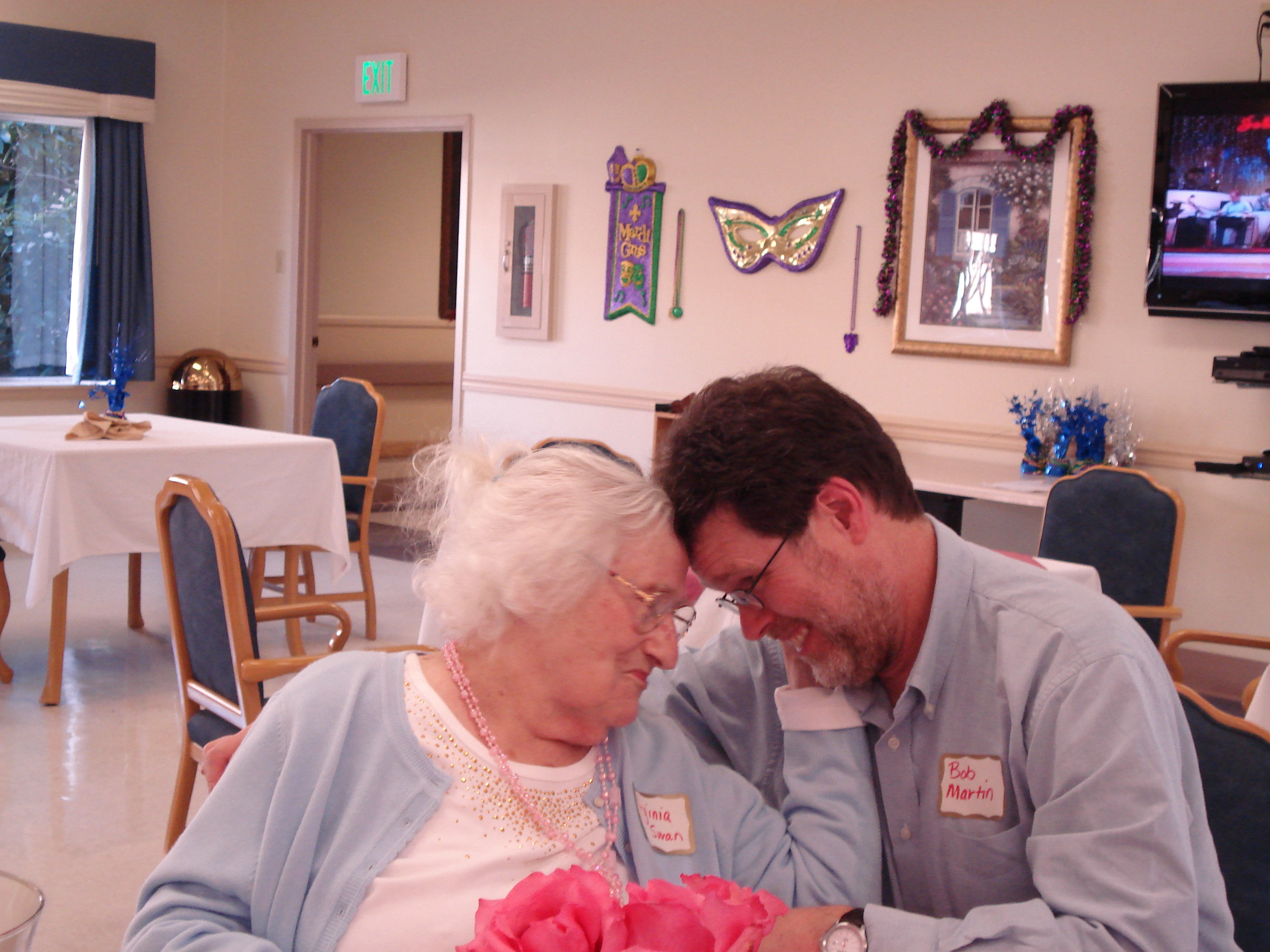
Happy 103rd Birthday, Gramma!

My Get Up and Go Has Got Up and Went

(source unknown)

How do I know that my youth is all spent? Well, my get up and go has got up and went.
But in spite of it all I am able to grin. When I think of the places my get up has been.

Old age is golden, So I’ve heard said. But sometimes I wonder, as I get into bed.
With my ears in a drawer, my teeth in a cup, and my eyes on the table until I wake up.

Ere sleep dims my eyes I say to myself, “Is there anything else I can put on the shelf?”
And I’m happy to say as I close the door, “My friends are the same, perhaps even more.”

When I was a young thing my slippers were red, I could kick my heels as high as my head.
Then when I was older, my slippers were blue, but still I could walk the whole day through.

Now I’m still older, my slippers are black. I walk to the store and puff my way back.
The reason I know my youth is all spent, my get up and go has got up and went.

But really, I don’t mind when I think with a grin, of all the grand places my get up has been.
Since I have retired from life’s competition, I busy myself with complete repetition.

I get up each morning and dust off my wits, pick up the paper and read the ‘obits’,
If my name is missing I know I’m not dead, so I eat a good breakfast and go back to bed.

Dear Gramma,

It is always such a joy and delight whenever I visit you and I regret not being able to help celebrate your 103rd birthday. There are so many fond memories of good times spent together. To me, you’re the epitome of graciousness and a gentle spirit. You’re always pleasant to be around. There couldn’t have been a better grandmother in the world. Even though the eyes don’t see as well, and the ears don’t hear as well, and the fingers aren’t as dexterous, your mind is just as sharp today as it was 50 years ago. Back then – it’s a pleasant place for me to go where we’d sit on the front porch and watch the trolley cars go by. And you’d let me ‘help’ you push the lawn mower in the back yard. I once stepped on a bee and you had the best medicine – a Popsicle! We’d walk to the park and you’d give great big pushes on the swings and dig deep tunnels with us in the sandbox. Getting dirty was never a problem. A bouquet of dandelions always delighted you. You liked it when we’d ‘help’ in the kitchen and so you’d pull up a chair next to the counter. My favorite jobs, of course, were cracking the eggs and licking the batter off of the beaters. You’d climb up onto the top bunk bed and read us stories. Upon hearing the doctor’s advice to limit yourself to two beers a day, I still laugh at your decision to go from 12oz to 16oz cans! You taught me about honesty when, after having sent me to the grocery store to buy pancake batter, I (somehow) managed to not come home with the correct amount of change. You knew right away that I had ‘pilfered’ the cash and bought candy for myself. And too, you weren’t too pleased when you discovered me in the basement using matches as ‘indicator lights’ on my Tonka Toys. Even so, it was always comfortable to have you around. I always knew that you loved us. You still give us great big ‘bear hugs’ and squeeze us hard. I love it. I love you. And I look forward to seeing you again soon. All the very best on your 103rd, Gramma.

Love,

Bob

Humility – Is There an Easy Way to Learn It?

Phil 2:3 in my NIV says, “Do nothing out of selfish ambition or vain conceit, but in humility consider others better than yourselves.”

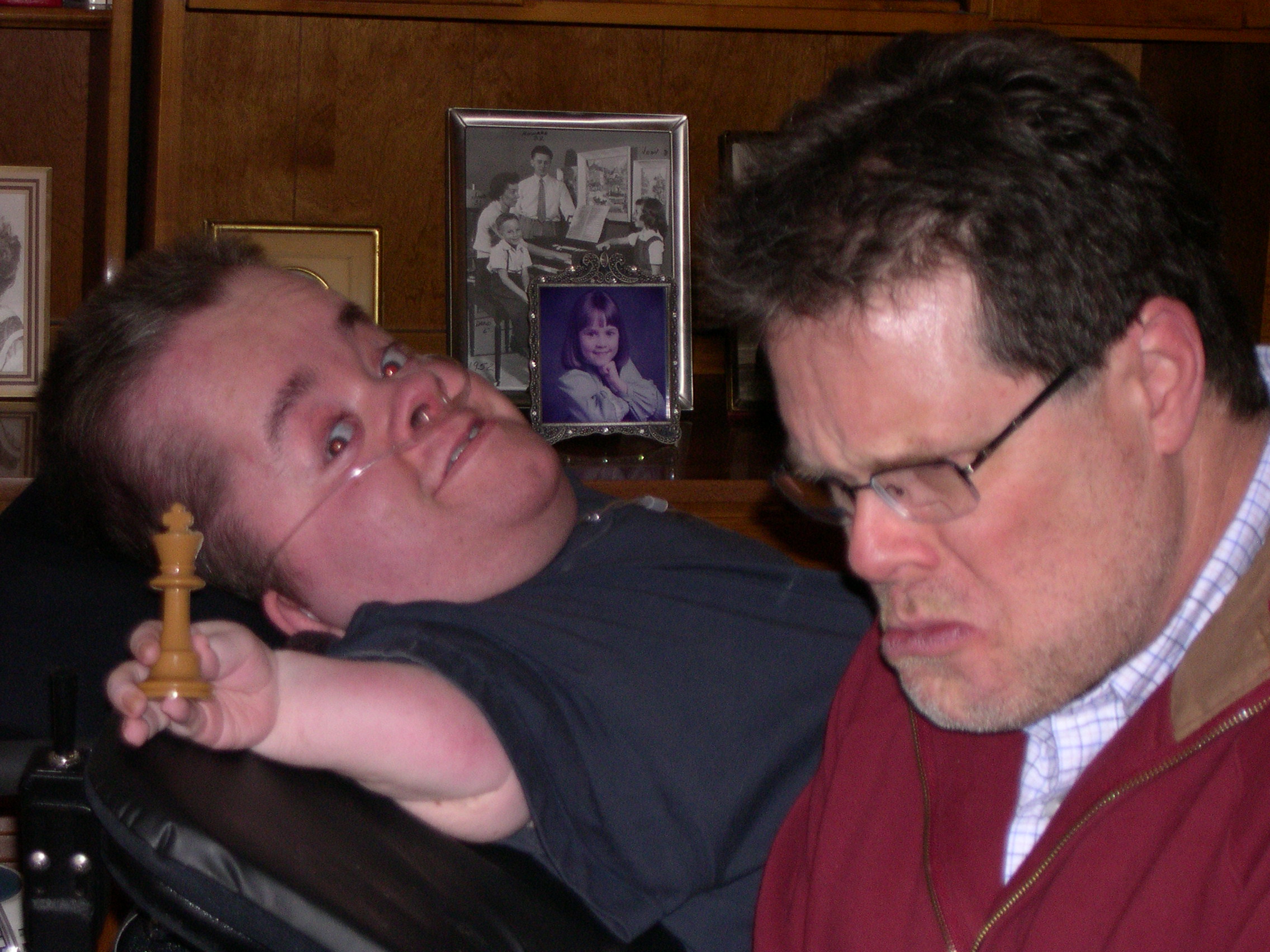
No doubt humility is an important Christian virtue and it would appear that my good friend and able chess warrior, “Dr. J”, believes I need just a teeny weeny bit more humility in my life. Honestly, how is one to know? I tip my hat to “King James” for providing yet another opportunity to learn about humility. Just when I think the game is in hand, I manage to snatch defeat out of the jaws of victory. Oops, that doesn’t sound too humble, does it? Well Jay, set ’em up as I’m ready for another lesson. If only you weren’t such a good teacher, though. Oops, that doesn’t sound too humble either. Well, looks like we might have to play a whole bunch of games before I get this conceit – oops – I mean concept down.

If God Can Be Surprised by His Creation, Can Calvinists Really Claim Unconditional Election?

A friend recently indicated his doubt as to whether God is suprised by anything. I’d previously come across Gen 6:6 which says, “The Lord was grieved that he had made man on the earth, and His heart was filled with pain.”  My only consideration of this verse and passage was that God knew what was going to happen and when sin fully engulfed man that created a separation between a holy God and a sin-filled man, God was grieved about this. 

Thinking back to my elementary school years, I knew my report cards were going to be full of failing grades and for what it’s worth, I ended up having to repeat 6th grade. Still, I hated the anticipation of those report cards. I would dread being handed the report card by my teacher. I was fearful of having to show that report card to my parents. Yet, when I was actually handed the report card and looked inside, the reality of those bad grades hit hard and I felt much worse than I had beforehand. 

The thought then occurred, how would I have felt if I wasn’t expecting those bad grades? Would I have been “surprised” even if I may have had some inklings that all was not well?

It seems to make sense that God would know everything because He’s omniscient and not constrained by time. How could God possibly be surprised at anything?  Well, seek and ye shall find – as I stumbled upon these verses while digging through a concordance for words such as “grieve” and “regret”:

1 Sam 15:10-11 Then the word of the Lord came to Samuel; “I am grieved that I have made Saul king, because he has turned away from me and has not carried out my instructions.” 

Num 14:11 The Lord said to Moses, “How long will these people treat me with contempt? How long will they refuse to believe in me, in spite of all the miraculous sings I have performed among them?” 

Jer 19:5 (I’m pretty sure God is speaking here) They have built the high places of Baal to burn their sons in the fire as offerings to Baal – something I did not command, nor did it enter my mind. 

Given that these verses don’t appear to be spoken/written in hyperbole, they do appear (at least to me) to indicate that God can sometimes be surprised as to the exact outcome of something.  Could this be true?  Can God be “surprised” – at least in regard to things He hasn’t predetermined? These verses alone certainly don’t constitute a full defense of Open Theism.  Nevertheless, the question that comes to my mind is: if God can be surprised, can Calvinists claim unconditional election with absolute certainty?

Divergent Thought (Calvinism, Arminianism, Open Theism); It’s Everywhere – Happy New Year!

A Facebook friend recently posted this comment, “We may cast the die, but the Lord determines how it falls.” I couldn’t resist a little prodding for some details and asked the question – “So, even if we ‘think’ we’re ‘doing’ something, the outcome of that something is already predetermined by God?”

I liked Tom’s response and have pasted it here:

God always knows the outcome of any event. However, he normally doesn’t control the direct consequences of any action. He can and sometimes does [control events] when asked but He’s in no way obligated to do so. Why would God create the laws of nature and [call] them good along with all creation by continually circumventing them?

[God] makes everything work together towards whatever purpose He has in mind. [For] example, all of creation was created by God to glorify Himself. Because that’s His will, it’s what will happen. The fuzzy line comes when we’re affected by God’s will.

Do we have free will? Yes. God will judge us all on what we do, whether good or bad. (2 Corinthians 5:10, also pretty much anywhere in Jeremiah, Isaiah, Ezekiel) To be just, a judge must punish the guilty party. If a robot were programmed to kill someone, who’d be punished – the robot or the programmer? The robot had no free will to choose either right or wrong, so [the robot would] be pardoned. The programmer did have the free will to choose and will be punished for his crime. In the same way, if we have no free will and God is truly just, he would [have to] condemn Himself for forcing us to do wrong. If that is the case, then God is not good. If God is not good, then we have no hope. For if the ultimate power in the universe takes pleasure in evil, nothing He says [could] be trusted. If He is [just], by his mercy we have hope through Jesus Christ. If He isn’t [just], we have no hope because the combined power of creation was created through Him and for Him, and He sustains it all. (Colossians 1:15-17)

Does God protect us from being affected by our choices in a bad way? No. If you steal something and are caught, you’ll be brought to justice. God delights in that. Because He saved you from eternal life in Hell by your faith in Jesus doesn’t mean He’s saved you from the worldly consequences of your actions. This doesn’t mean He can’t have mercy on you. [Rather], He has no obligation to [protect] you from the result of your own free will. He’s [given] you the Bible for the purpose of helping you avoid destroying yourself and to find true life.

However, [God] works all things to the good of those who love him. (Romans 8:28) If you love God and do something stupid, you will reap the consequences of your actions. God will then use that stupid action to eventually work for good in your life, not because of your wisdom, your strength, your righteousness, but BECAUSE YOU LOVE GOD.

The question [becomes]: are we living and acting from a love of God or an apathy or hatred of God? The answer has no bearing on the outcome of His plans, but they have every effect on what becomes of us.

I responded to Tom on how I liked the analogy of people employing various free-will combinations – such as the mixing of an acid and a base with the end result being that God ensures how those kinds of molecules will interact. However, something had earlier crossed my mind relating to God knowing in advance how everything will turn out. I ‘think’ Isaiah 5:1-5 infers God planting and cultivating a crop of grapes with the end result being something not anticipated – bad fruit. As such, can God be surprised at any given end result? If God is surprised at this particular end result in Isaiah, can believers claim that God fully knows each and every outcome of each and every circumstance, situation or decision one might make?

On that point, Open Theists claim that the future is at least partly open (unknown) to God except in those areas where God has determined exactly what the future will be. In any event, I would certainly agree with Tom’s earlier statements that A) we have free will, B) God doesn’t necessarily protect us from our bad decisions (or necessarily reap blessings upon us for good decisions we may make for that matter), and C) God can use all circumstances for His glory.

Perhaps unknowingly, Tom stated Calvinist thinking wherein he had previously said, “All you gotta do is let [God] take your junk.” I responded to Tom that he  might not actually have that opportunity to give his ‘junk’ to God because, according to Calvinism, God chooses whose ‘junk’ He’ll take. More to the point, God determines who’ll be forgiven for their ‘junk’ therefore determining who will and who will not be saved. So, to repeating Tom’s last statement for the comfort of my Arminian friends, “All you gotta do is give your ‘junk’ to [God] and He will forgive you.”

How about that – Calvinism, Arminianim, and Open Theism considerations are all nicely placed side by side in one fell swoop of love and togetherness. Peace be upon all my believing brethren (including you, Tim) for the coming year. Happy New Year!

The Nature and Effect of Grace in the Life of the Christian

I recently had a conversation with an atheistic Facebook friend about the nature of grace. By his own account, “JH” isn’t too keen on Christianity in part because of the hypocrisy he sees between the stated views of many Christians and the observable actions of those same Christians. If Paul’s contention is correct wherein, “It’s no longer [I] who live, but Christ who lives in [each and every Christian]” (Gal 2:20), then perhaps it only stands to reason that outward behaviors and actions are the result of inward belief.  As such, perhaps it’s fair to make judgements regarding the validity of the Christian life based on the disconnect JH sees as to what Christians say versus what those same Christians do. To me, the problem is misdirected attitudes about a holy God based upon the behaviors and actions of God’s creation who nevertheless are saved from their sins but still exhibit a sin nature.

In any event, JH is always good at bringing up thoughts and considerations I would not have otherwise entertained. He forces me to think about and defend my faith. I enjoy my periodic chats with him and thought I’d post a portion of a conversation centered around the grace of God.

JH: It’s my opinion that grace would likely be a combination of good deeds and right actions in the pursuit of Christianity. Grace isn’t some fat slob driving around in their Ford-F150 with a bumper sticker that says, “Christians aren’t perfect, just forgiven.” I’ve always had the impression that Jesus would demand more of people than simply getting a membership sticker for their soul. That can’t be all that Christianity requires of its adherents.

Bob: Here’s the definition of grace found in my NIV Topical Bible: “Grace is God’s life-transforming gift of his favor to those who don’t deserve it. The gift of salvation and forgiveness of sins is available for all who through faith accept his grace revealed in Jesus Christ, but so many miss the gift because they rely on themselves and try to earn grace by keeping the law.” As such, grace can’t be earned through actions, good deeds, tithing, or anything else. However, as it says in James 2:17, “Faith by itself if it is not accompanied by action, is dead.” I therefore think it’s more accurate to say that one’s actions, deeds, behaviors, etc. are the outward expression of God’s grace from within.

JH: I have to believe that there’s more effort [required] than simply announcing you’re Christian and then continuing with the same crappy behaviors as you did before. If that’s true, then Christianity truly would be a club I’d never want to belong to. I’d never want to spend an eternity with the likes of the scummy people who’d be there.

Bob: The Bible is pretty clear in saying that according to God’s standards, all of our righteous acts (good deeds et al) are like filthy rags (translation: used toilet paper). Christ came to bridge the expanse between a holy God and a sinful creation. It’s a free gift and one can accept or reject it. When one accepts that free gift, it IS a life-changing event and the good deeds (which I believe should naturally follow) come about because God’s love is the “fuel” to motivate believers into actions. Something IS wrong if one claims new life in Christ and continues with their crappy behaviors as before.

JH: I just can’t see that grace is that simple. If one isn’t living up to their beliefs, then one is a crappy Christian.

Bob: Perhaps the feelings I experienced when watching my kids being born are some small semblance of how God feels towards us. There was NOTHING I wouldn’t have done for that child the moment they entered this world. That child hadn’t earned or done a blessed thing. But there I am, loving it with all my heart and willingly giving that child everything I have. And even when one of them grew up and became an angry and drug-filled alcohol-laden teenager (which is true), I still loved him in spite of the heartache that he brought. Through all those difficulties and disappointments I only wanted the best for him and I was more than willing to do whatever I could to help him even though he continually rejected me. Put another way, God’s grace to us is perfect and unwavering. However, because of our sin nature, our response to God’s grace is, well, most of the time disappointing and leads to the hypocritical examples you’ve previously sited. Admittedly, Christian hypocrisy is an open sore. Everyone sees it. Everyone hates it. But the cure isn’t to “try” and “do” better. That’s nothing more than “works”. Rather, the solution is to submit to the love of God and allow God’s love to permeate through one’s life and flow out of the believer into the actions, behaviors good deeds, etc that people see.

JH: What non-Christians want most from Christians is simply to be left alone. We know about Jesus. We know about Christianity. We have a good idea as to what Christians think the “rules” are. But we aren’t interested. Is Christianity making you happy? Is your life better off because of it? If the answer is “yes,” then we’re happy for you and we might even be willing to take a closer look. However, if the answer is more along the lines of what is seen in Christians most of the time, we have to wonder why – trade the thing I have for something that looks like that? Christians range from very good people all the way down to the Westboro Baptist Church types.

Bob: Reading your last comment, an analogy came to my mind regarding Westboro Baptist Church. Think of it this way – the Christian faith is the absolute most delicious and plentiful food imaginable. And, it’s always available. Unfortunately, there’s something utterly gross, rotten and stinking to high heaven in the fridge. And, when we’d love to open the fridge to get a chunk of Christian faith, we can’t get past the smell of Westboro. On that point, I don’t think the Westboro types diminish the Christian faith – even if their actions truly stink up the place. Rather, I think the actions of the Westboro types more accurately reflect a lack of Christian virtue within their lives.

JH: There are many of us who aren’t Christian who’d be more willing to think about Christianity. But we remember the last thousand times Christians have tried to inflict their morals on us, called us devil worshippers, harassed us at work, knocked on our doors, left us tracts, wrote letters to the editor, or called for our death or imprisonment. I think everyone agrees that this isn’t the way it’s supposed to be. I still can’t see that grace is that simple. Or rather, as you imply, grace just IS – by definition. I still think if one isn’t living up to their Christian tenants, then one is a crappy a Christian like, well, most of the Christians out there.

So, how best does one follow-up or otherwise continue this conversation? I’ve heard Bob George, author of Classic Christianity, give an analogy how it’s the same sun that both hardens clay and melts wax. His inference, I think, was that God’s mercy tends to harden some individuals while at the same time it also has the effect of humbling others to their own sin and the need for a savior. Are discussions such as this counter-productive? Maybe JH’s heart is hardened against Christianity to a degree that he can’t contemplate that peace that passes all understanding because of what he sees as the outward behaviors and actions being the definitive “result” of “being a Christian”.

Thoughts, anyone?

Identifying Absolute Truth; My “Relatively” Feeble Attempt

I while ago I responded to an atheist friend’s Facebook comment about blaming Republicans for (at the time) the failure of congress to pass the 911 first responder’s (Zadroda) bill allocating money to those first responders experiencing continued health issues from the response and clean-up efforts on the 2001 attacks on the World Trade Center in New York City.  We went back and forth as to some political thoughts highlighting our respective positions.  I’m definitely conservative and JH is definitely liberal.  Eventually, the discussion weaved its way through the concept of grace and we ended up with my being challenged to support the notion of absolute truth.  I initially thought this would be a relatively (pun intended) easy task.  But as I began, the reality set in that I’m unable to defend absolute truth apart from the doctrines of my Christian faith.  That’s clearly not what I intended to end up with.  For me, however, this was a good exercise and after all was said and done, I thought readers of this blog might be interested in my $0.02 worth regarding absolute truth.  I don’t intend for this ‘paper’ to be the end-all of my philosophical thoughts related to the concept of absolute truth.  However, it’s a start and we’ll see where we go from here.

I appreciate the chance to think through and reflect on aspects of my Christian faith that for all intents and purposes I’ve simply taken for granted.  If nothing else, I’ve had to delve into a somewhat shallow aspect of my beliefs and I thank you for that.  Well, on to the matter at hand.

First, we need to dispense with the boilerplate stuff.  These terms and definitions come from one of the books noted below:

  • Absolutism: Principle standards, which are objective rather than relative.
  • Objectivism: Moral values and principles exist independent to individuals thereby providing norms to which something can be judged as either true or false.
  • Subjectivism: Emphasizing the individual self or subject as the creator of meaning, truth or values.
  • Relativism: Claiming there’s no such thing as absolute truth because what is regarded as true varies from person to person.  Truth, therefore, is seen as relative to a person’s time, place or circumstances.

I like the definition of “absolute truth” as a fixed point of reference that doesn’t change with respect to situations or circumstances.  An easy visual example is that of a chair placed in the center of dark room such that, even if blindfolded, one can navigate throughout the room always knowing where they are with respect to the chair.  However, if the chair moves when the person moves, there’s no longer a fixed reference point.

You’d asked for some examples of absolutes.  The only thing I actually had in mind when offering to provide “some” examples of absolutes was gravity.  However, a little brainstorming brought the below list of absolutes that are at least within the physical world:

  • Gravity – Irrespective of something’s size or mass, the object will fall to the ground at the same rate of speed because of gravity.
  • Ohm’s law – Apply one volt through a one ohm resistor and you’ll have one amp of current which equates to one watt of power.
  • A traffic light – green light means “go” and a red light means “stop”.
  • Airplane/marine external indicators – green means starboard (right) and red means port (left).
  • Food – if one doesn’t eat, they’ll (eventually) die.
  • Mathematics – 1+1=2
  • Measurements – A meter is a definitive length.  Four cups (8oz) of water will always equal one quart.
  • Reganomics – This is just to give you the ‘needle’!  {;-P
  • 2nd law of thermodynamics, which identifies the impossibility of perpetual motion.
  • Friction generates heat.
  • Boyle’s law of chemistry.
  • Infants wet their pants.
  • Time – or at least intervals thereof.
  • Nothing moves at absolute zero temperatures.
  • Water boils at 212F/100C – well, at sea level anyway.
  • The earth rotating around the sun and the moon around the earth.
  • Speed of light.
  • The Periodic Table of the Elements.
  • Dogs make better pets than cats – This is to again just give you the ‘needle’!  {;-P
  • Nobel metals don’t oxidize and thereby don’t corrode.
  • Any house project I set out to do costs >2x what is planned and takes >3x the time expected.  I have empirical evidence to prove this!
  • Cold air makes snot flow out of my nose.
  • Brain cells deprived of oxygen will die.
  • Men are XY, women are XX in their chromosomal makeup.
  • The cost of any given item is predicated on its supply and demand.

Granted, many of the above examples would certainly be considered more along the line of a “definition”.  Even so, they’re constants in that they’re true for everyone.  Given that there are absolutes in the physical world, it’s conceivable to me that absolutes exist within an intellectual and/or moral perspective.  There’d be chaos if no one played football, baseball, or any other sport for that matter by the same rules.  And too, confusion would reign supreme if we didn’t use the same language structure and word definitions.  Well, perhaps language is a weak example considering that new words are created over time and sometimes definitions change; words such as ‘mouse’, ‘head banger’, ‘weed’, ‘Google’ and ‘gay’ immediately to mind.  Nevertheless, I think the point is still valid.

It may appear simplistic, but I do believe our lives literally depend on the belief that absolutes exist and that everyone plays by the same rules in order to “get-along”.  I would submit that horrible historical events such as the Holocaust came about because absolute moral values were predicated on relativistic terms.  Didn’t Nazi leaders in WWII use Darwin’s principle of survival of the fittest?  In light of that, it could it not make sense that Germany saw themselves as a superior race to the Jews and therefore began “the final solution”?  If there’s no ability to define absolute truth, then it stands to reason that any outcome could conceivably have its own justification.  As such, should the subsequent Nuremburg trials and death sentences meted out have ever been conducted?  Other horrible events with terrible repercussions also come to mind including the Sudanese genocide, modern-day suicide bombers in the Middle East and elsewhere, Stalin’s purges in the USSR, the Crusades during the middle ages, Pol Pot, the Dresden bombing, the intentional starvation in Darfur, etc.

The above is obviously from a “dark side” of humanity.  But consider something thing from a different perspective.  Perhaps Mother Theresa should have been burned at the state for having been nothing more than a little pimp hussy with her young Indian charges.  Truly, there needs to be some sort of objective in which to define actions and behaviors as either wicked or good – or even somewhere in between.  To me, then, the implications of not having a “foundation” or a “truth gauge” can ultimately lead to disastrous applications.

Within this context, I sense the opposite of absolute is relative.  Perhaps a good example of someone claiming an absolute perspective versus a relativist perspective is Ann Landers.  Years ago, Ann advocated that sex before marriage was wrong.  Later, however, when asked why she had changed her mind, Ann’s response was, “Times have changed [and] we have to keep up with times.”  Speaking with regard to sex before marriage always being wrong (I can’t confirm that’s what she meant, but for the sake of argument we’ll assume so), Ann spoke as an absolutist.  That Ann changed her mind with respect to keeping up with the times would then indicate that she really had no absolute values regarding sex before marriage.

If it feels good, what the heck – do it!  Without a basis for values, can there be a basis for morality?  In addition, without morality, can there be societal standards that govern behavior?  Rape 10 year-old girls – what’s the problem?  Who’s to say that it’s right or wrong?  Questions pertaining to individual or corporate morality, it would then appear, have to be made relative to a stated source for the governance of that morality.  Legalize marijuana – is there a right or wrong here?  Do the benefits of legalizing marijuana for medical use outweigh the potential of more people getting hooked on drugs?  And again, perhaps that’s not the best example – but for now, it’s the best I can come up with.  Put this way, if one’s values are relative, then one’s own sense of morality is by definition relative.  Can there be a definitive right or wrong or only assumptions based upon one’s own perceived values of right and wrong?  Collectively, then, what a corporate people group would agree to as right or wrong would have to be their definition of what constitutes right and wrong.

Given that there can be no absolutes for a relativist (at least as I see it), I’d submit that the philosophical aspect of relativism is at best confusing considering:

  • If a relativist thinks something is true for everyone, then he believes in an absolute truth and can no longer call himself a relativist.  Therefore, hasn’t he just taken an absolutist position?
  • Billy Graham believes God exists.  An atheist, however, doesn’t believe God exists.  For both to be right, God would have to exist and not exist (which I believe to be untenable because I believe God does exist).  In a similar manner, how can we state that a cup of coffee is either hot or cold unless we have a reference?  Perhaps there’ll have to be arguments made later to justify the existence of God – but for now I’m trying to keep things close to the surface.
  • Everyone knows the math statement: if A=B and B=C, then A=C.  However, in regard to Billy Graham (A) believing in God (C) and the atheist (B), denying God’s existence (D), I think the logic would go something like: if A=B and C=D, then A=C, A=D, B=C and B=D.  But this can’t make sense because by definition of (A) & (C) are opposites as are (B) & (D) aren’t the same.  As such, these statements would have to be considered not true – or at the least, undefined.
  • If there’s no “standard”, no one can ever be wrong since there’s no way of determining right and wrong.
  • If something is true for one, does it remains true even if it’s considered wrong by someone else’s “standard”?  Suddenly we’re back to a lot of undefined statements.
  • If one claims no such thing as absolute truth, haven’t they then assumed that no “view” can be true?
  • On what basis can such claims for the opposites of right and wrong coexist?

How is it that those who don’t believe in any form of absolute truth or objective morality insist on making objective moral statements against those who do?  Can a relativist insist on using terms like “wrong” and “evil” instead of something more “relativist” such as: “It’s neither right, wrong, good, bad, or indifferent.  It just is.”  Or, perhaps the relativist could say, “I don’t like it but if you do, I’m okay with that.”  This thought seems consistent from the title of a book written in the early 1970s, I’m OK, You’re OK.

So, if truth isn’t subjective, the next question has to be how do we know what truth really is?

  • Most people will not deny they exist or that they can reason.
  • We know we exist because we’re aware of our existence.
  • Truth corresponds to facts.
  • We’re aware of some facts such as matter and reality.
  • Is there a way to know the source of this reality?
  • Even agnostics will admit to the “logic of cause and effect”.
  • What was the “first cause”?  How did the universe begin?  Is God a logical concept?
  • Without God, where did matter come from?

Descartes famous line, “I think therefore I am” is interesting in that it illuminates one’s own existence and that we have the required capacity to reason.  We know we absolutely exist and therefore if someone were to say to us that we didn’t exist, rationale thinking says that it’s impossible for both of these claims to be right. Then again, things can appear to be true at some times and not at others.  Around the time of Columbus, many people believed the earth was flat.  Today, however, we know the earth is a sphere.  Someone might infer that the truth has changed.  But in reality, it didn’t.  The earth has always been a sphere even when people believed it was flat.  The truth of the earth’s physical shape did not change but I think it’s safe to say that people have changed from holding a false belief to a true one.  In essence, our beliefs with respect to the shape of the earth now correspond with the facts.

In summary, then, for someone to then say that there’s no such thing as absolute truth is to state an absolute and from my feeble understand, this is a contradiction of terms.  Yet, everyone seems to have an innate sense of right and wrong.  Who hasn’t been “cut-off” while driving?  The immediate reaction is anger and rage, flipping the ‘bird’ at the other driver and shouting out, “You stupid %#$@&% idiot!”  Even small kids understand the unfairness of an action when, say, someone cuts in front of the line for an ice cream cone.  Lying in legal court proceedings is perhaps a violation of another absolute and courts have laws regarding perjury in order to ensure compliance to the law.  From where do we get this innate sense of right and wrong?

Therefore, I think it’s reasonable to state that there are absolutes.  The question, then, becomes whose absolutes do we follow?  How, then, do we know that one’s absolutes are indeed absolutes?  On this point, I think we get to the crux of the issue.  Being honest here, I’m sympathetic to those who’d say the Christian idea of absolute truth is intolerant, narrow-minded, bigoted and even exclusivist.  Christianity’s claim is not that it’s one truth among many.  Instead, Christianity claims to be the only channel through which truth is communicated.  I’ll concede, that sounds rather exclusive.  In reality, though, Christianity isn’t the only faith-belief doctrine that claims to be exclusive.  Even a cursory examination of, say, Islam reveals its exclusive claims of truth through Allah and the necessity of Jihad.  It’s fascinating to observe the degree to which Western people generally condemn Christianity for its self-proclaimed tenants.  Yet the adherents of Islam are in essence given a pass for their self-proclaimed tenants that are in my mind much more punitive to the non-Muslim infidel.  However, that’s probably a different subject altogether.

Nevertheless, it’s hard to ignore a “diminished evaluation” of other beliefs (faiths?) when biblical scriptures such as John 14:6 state: “I am the way, and the truth, and the life; no one comes to the Father, but by me.”  The thought occurs to me as I’m thinking back on our conversations about ‘grace’ – I fully agree and understand that if the truth the Christians professes to possess is only proclaimed for others to live by but not those within the “Christian community”, who would want to believe Christianity’s message?  Along the same line, even if Christians fail to live up to the standards of their faith; do those failures necessarily illuminate false doctrine?  Perhaps those failures are better defined as ignorance of the Christian faith or the inability of Christians to uphold to their faith?

To that point, I think C.S. Lewis said it best when he concluded that everyone has to come to a point where they determine that Jesus is either lord of the universe, a liar, or some kind of lunatic.  Cultural trends come and go with the passage of time.  Hey, if nothing else, thank [our supreme being] that we aren’t heading back to the disco days anytime soon.  Those colorful bell bottomed polyester leisure suits, fat belts and heeled shoes were the pits!  However, I do miss the hair!!!!  Nevertheless, the basic message of Christ as ‘the way, the truth, and the life’ has remained for nearly two thousand years.

My daughter once explained to me that the concept of absolute truth might be more clearly defined by the concept of non-truth (or falsehood).  Intolerance is (to me) a good example.  Are people who believe in absolute truth intolerant?  Wouldn’t tolerance be putting up with error and not accepting all views as true?  So, if tolerance is putting up with error, doesn’t that assume that there is truth?  You can’t have error without the concept of truth much like you can’t identify whether a cup of coffee is hot or cold without a reference. To me, a belief system composed of objective truth that claims to be founded on a fixed point of reference is the only consistent way of living and thinking.  I would therefore submit that absolute truth gives a firm foundation for decision-making and the implementation of principles into our daily lives.

The End

I apologize that it’s taken me a lot longer than I expected to piece this little ditty together.  Yet, after reading through this “tome”, I’m not sure that I’ve adequately answered your question or provided sufficient reasons or examples as to the existence of absolute truth.  I think I devolved into what I already have believed for some time.  and, maybe that’s okay.  That’s where I am – believing that absolute truth exists both in the physical world as noted above and within the intellectual world as I’ve tried to argue here.  It was my intent to prove absolute truth exists apart from having to lean on my Christian faith.  Nevertheless, I ended up where I did if for no other reason than because I see my Christian faith as the epitome for absolute truth which is best exemplified through the life of Christ.  Christ’s life and teachings are the basis for my standards of morality et al in spite of the fact that Christians (and certainly myself include) all too often aren’t examples of living a life predicated on Jesus’ teachings.  Maybe it’s possible to understand partial absolute truth with reason and logic apart from Christianity.  Then too, maybe I’m concluding that the ultimate source for absolute truth is beyond our finite abilities of reason and logic and perhaps for that realization of truth to be found, we have to be open to the source of absolute truth.

Well, agree or disagree – there you have my $0.02 worth.  Feel free to comment, question or challenge anything said.  As you’ve perhaps sensed, I enjoy healthy debate, deep discussion and having to dig deeper into things about which I really ought to have a better understanding.  Without your gentle prompting, this would not have happened.  So, thank-you.

Final note: I regret not having done a better job sourcing quotes, logical constructs, and miscellaneous thoughts that aren’t my own.  It wasn’t my intention to plagiarize per se. What I thought was going to be a relatively simple explanation got exceedingly complicated rather quickly. And, I’m guessing people who’ve studied philosophy are not at all surprised. Still, looking through a couple of philosophy books and checking out some web sites I visited, miscellaneous notes were scribbled down here and there and it didn’t take long before I lost track of what came from where. I should have done better in this regard – if only to go back to particular sources for further consideration. But I didn’t. Even so, a couple of books I drew from for definitions and some lines of reasoning in compiling this piece are Philosophical Issues and Problems, by Joseph Bien & William Bondeson and Understanding the Times, by David Noebel.

Calling all Brethren of Christian Clarity Review, come in please, over.

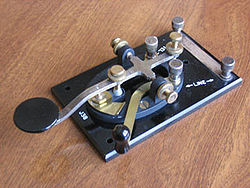
dit dit dit dahhhh    dit dit dit dahhhh    dit dit dit dahhhh

CQ CQ CQ (that’s ham radio jargon for, “Anyone listening on this frequency?”)

CQ CQ CQ Brethren of Christian Clarity Review, come in please – over.

CQ CQ CQ Brethren of Christian Clarity Review, this is Martin’s Mercurial Musings, come in please – over.

Hmmm.  No response.  The Rev Timothy Elder, an honorably retired Presbyterian minister in the Gulf Coast Presbytery and blogger at Christian Clarity Review has claimed to be God’s messenger to the brethren regarding “created speech”.  Yet, could it be that there are no Christian Clarity Review brethren?  In other words, is Tim a “fellowship of one” without the benefit and blessings of being a part of a body of believers?

I rather doubt Tim has saved his most vitriolic “created speech” for me even if I had a bit of fun when I wrote this post – a take-off on Keith Olbermann’s “Worst Person in the World”.  Tim obviously has a sharp mind and appears well learned in Christian doctrine and church history.  I’ve always thought that the good news of the Christian faith brought about unity.  However, that’s not what I see in Tim’s writings.  Sadly, it’s hard for me to see where the love of God is revealed in Tim’s writings.

So, what’s the purpose of these posts pertaining to Tim Elder at Christian Clarity Review?  Frankly, I’m hard-pressed to believe the vitriolic “created speech” Tim spits out exemplifies the love of God and I don’t understand the motivation for Tim to write the things he does.  To that end, I’m told that light is the best disinfectant.  And so, it’s my hope that by bringing the light of day to Tim’s writings, others who are perhaps in a better position to evaluate the truth (or lack thereof) regarding Tim’s writings would do just that.

dit dit dit dahhhh    dit dit dit dahhhh    dit dit dit dahhhh

CQ CQ CQ

CQ CQ CQ Brethren of Christian Clarity Review, come in please – over.

CQ CQ CQ Brethren of Christian Clarity Review, this is Martin’s Mercurial Musings, come in please – over.

Christmas Food Court Flash Mob: The Hallelujah Chorus

As I understand it, a lunchtime crowd at a Canadian shopping mall food court was surprised and delighted when over 100 members of a local choir participated in something called a “Christmas Flash Mob”.  This really is a must see and so I’m doing my part to help this video go “viral”.

Enjoy!

http://www.youtube.com/watch?v=SXh7JR9oKVE