
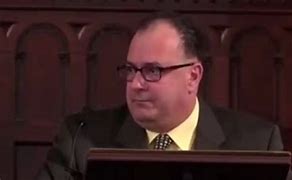
When I first viewed the video in which Dr. Zachariades claims that God enables or precludes someone from committing adultery (noted below) I thought, what kind of demented theology does this guy possess? I have always thought that one of God’s attributes is his holiness. Is Christian faith predicated on God who would violate his own moral standards? Can I then infer that God decrees all manner of sin including murder, rape, human trafficking, serial killers, and whatever other horrid act that one can possibly conceive?
Not only that, but because of unconditional election, God also decrees whether one is ‘elect’ or ‘reprobate’. And God stipulates not only what everyone would believe as to matters of faith, but that he’s brought about cultish Christian religions including i.e. LDS and JW.
So, it’s been decreed that I should conclude Calvinism is illogical and unbiblical? And it’s also been decreed that I have free will. But, per Calvinism, whatever happens going forward including my deconstruction from Christian faith is because God orchestrates it. Interesting, if only because I’ve always thought that given the number of times God is surprised or expresses regret i.e. Gen 6:6, there had to be some semblance of free will amongst God’s creation. It stands to reason that God will permit things to happen even though he has the power to stop it. Yet, under Calvinism, everything is determined. So, everything that happens is by a decree because nothing comes to pass which God has not intended to happen.
Okay … I guess it’s been ordained for me to attribute the atrocity of murder or rape to a holy and loving God to be reprehensible. But what if I believe God to be the absolutely standard of holiness and morality? Therefore, when God says, “you shall be holy for I am holy”, isn’t this immediately claiming holiness which is based upon God’s own holiness? So, if God causes one of these little ones to stumble (Matt. 18:6), then isn’t God subject to his own charge that the one causing the stumbling deserves to be drowned in the sea with a millstone around their neck?
The idea that anyone can claim God is not subject to his own standard of holiness and then pronounce God’s authority to judge people’ sin is, to me, mutually exclusive. God is the standard of goodness and morality that we all must look to. If God violates his own standards, then God is no longer holy or moral. One cannot say God can change standards of holiness and morality for Himself whenever He chooses simply because he’s God. On the contrary, it’s because he’s God that those standards do not change. And that’s why believers can have a definitive understanding of of such things as goodness, morality, love, justice, and holiness. Is this not consistent with James 1:17 – Every good gift and every perfect gift is from above, and comes down from the Father of lights, with whom there is no variation or shadow of turning?
But, sadly, I’m realizing that Zachariades is consistent and mainstream in his theology with many other significant deterministic Calvinists:
James White
- White was asked, “When a child is raped … did [God] decree that rape?” Mr. White responded: If [God] didn’t [decree child rape] then that rape is an element of meaningless evil that has no purpose.
Vincent Cheung
- There isn’t one thing that happens [which God] has not actively decreed – not even a single thought in the mind of man.
- Evil could never have started without God’s active decree, and it cannot continue for one moment longer apart from God’s will.
John Piper
- [Everything] including evil is ordained by an infinitely holy and all-wise God to make the glory of Christ shine more brightly.
- God [sees to it] that a person does what God ordains for him to do even if it involves evil.
J.I. Packer
- God orders and controls all things – human actions among them.
R.C. Sproul
- God wills all things that come to pass.
- God desired for man to fall into sin.
- [God] created sin.
Edwin Palmer
- All things that happen in all the world at any time and in all history–whether inorganic matter, vegetation, animal, man or angels (both good and evil ones)– come to pass because God ordained them. Even sin– the fall of the devil from heaven, the fall of Adam, and every evil thought, word, and deed in all of history.
- [God] decides all that is to happen in the entire universe. Nothing in this world happens by chance.
- [God] decides and causes all things to happen that do happen.
A.W. Pink
- [God willed] that sin should enter this world. Otherwise [sin] would not have entered.
- Nothing happens except what God has eternally decreed.
- Nothing in all the vast universe can come to pass [other than what] God has eternally purposed.
Two main points can be derived from these quotes:
- God plans, initiates and carries out every human thought, deed and action.
- God is therefore the source and the cause of every sinful thought or evil act by anyone, anywhere and at any time.
How people can be held responsible for sinful choices which God has destined is beyond any logical conclusion. Calvinist theology teaches that God’s determinism is the ultimate causal force behind every sinful choice or rebellious act throughout human history. Per John Piper, God is the creator of evil and it’s God who determines what each individual’s choice will be and that God alone ensures the outcomes which he alone desires.
This kind of theological construct makes Christian faith difficult to accept. Realizing that many people with knowledge of the languages, culture and history as to the Bible have strong determinist perspectives of God is frustrating and challenging to accept. If Calvinism is true, I can only conclude that my deconstruction from Christian faith must therefore be desired by God. It’s what’s happening – God doesn’t want me and would rather I be reprobate and not elect. Afterall, God is bringing it about.

 Martin's Mercurial Musings
I’m not sure when this was originally posted, but the same clip appeared in a video by Alex Sorin (a new critiquer), which led me to watch the full segment.
I’m a “mere” Christian who remains in an agnostic-seeking posture when it comes to doctrine. I’m autistic, and that means I simply cannot assent to doctrinal claims that do not survive careful analysis.
For that reason, Calvinism fails for me at multiple levels. Any theological system that asks believers to accept what is explicitly said to “make no sense,” that violates ordinary and deeply held intuitions about goodness and moral responsibility, or that works hard to render itself immune from critique, is a non-starter.
The claim in the video that God decrees sin while human beings remain morally culpable is incoherent unless culpability is collapsed into mere blame. On that account, God causes X, humans perform X, and God then blames humans for X ultimately because God has absolute power. That is not moral responsibility in any meaningful sense.
Calvinists often attempt to rescue this by appealing to “primary” and “secondary” causation: God decrees events as the primary cause, while humans freely enact them as secondary causes. But if the divine decree is sufficient to bring about the act, then the human action cannot occur without it. In that case, the decree is causally decisive, and the appeal to secondary causation does no real moral work.
Another recurring problem as an example of further insanity, although not in the video, appears in the attempt to ground logic exclusively in God. The argument is often framed as: “The laws of logic are grounded either in God or in not-God, so which is it?”
This presents a false dichotomy. “God” is defined narrowly as a conception of God (for the Calvinist – a version they have approved), while “not-God” is made to include everything else: other Christian traditions, other theistic frameworks, the structure of reality, the human mind, or even brute facts. Once framed this way, “not-God” is declared incapable of grounding logic by definition. The conclusion is smuggled in by the setup. I myself am a structuralist when it comes to logic – the TAG version used by Calvinists makes no sense at all.
This is only one of several reasons I find Calvinism deeply frustrating, and I genuinely sympathize with where you are. I don’t know whether your deconstruction led you out of the faith altogether. I hope it was pursued through a rational lens, because it is possible to examine these systems critically and still remain within the Christian tradition. My own path has moved through several stages, and I now find myself somewhere between liturgical and patristic expressions of Christianity.
I hope you’re doing well. Identifying and rejecting theological systems that collapse moral responsibility or undermine the coherence of goodness is not a betrayal of faith – it is an act of intellectual and moral integrity.
Thank you, James, for your response. This video snippet was pulled from a debate on free-will in 2017 in which Leighton Flowers and Theodore Zachariades were participants. Here’s a link to watch the debate: https://www.youtube.com/watch?v=ZXWLJxonUKY
To be honest, I think such an interpretation of God – one that simply uses humanity for its own glory – stems from a deeply seated and unfulfilled psychological need for existential certainty. Calvinism can provide that certainly so long as one compartmentalizes the fact that:
With Calvinism, assurance of personal salvation is paramount, no matter who else has to suffer in order to get the believer to heaven.
This almost made me an atheist, but instead I’m a seeker withing the outer edges of the faith. I can’t go close to evangelicals because of what they are willing to justify in order to preserve certainty, and Calvinism is the absolute worst within evangelicalism.
It is entirely understandable why the debate involving Sonny Hernandez, Theodore Zachariades, and Leighton Flowers would lead to a crisis of faith, particularly when the logic presented suggests that God is the primary cause of sin yet holds the human agent fully responsible. To maintain this level of certainty, many high-Calvinists are forced to compartmentalize the more horrific elements of their belief system by utilizing three specific intellectual maneuvers. First, they often redefine the very nature of goodness and justice to align with a strict Divine Command Theory. In this view, “good” does not have an intrinsic meaning that we can recognize; instead, whatever God decrees is labeled good by definition, even if it contradicts our fundamental moral intuitions. This allows the believer to bypass the horror of “forced sin” by simply declaring that God’s standard for Himself is beyond human moral categories, effectively moving the goalposts so that the system is never at fault.
Building on this, the system becomes immune to external criticism by grounding logic and reason within a very narrow, circular definition of God’s sovereignty. By claiming that any critique from “human logic” is merely the product of a fallen and rebellious mind, they create a closed-loop system where only their interpretation is allowed to validate itself. This makes the theology a fortress; if you point out a contradiction—such as God blaming someone for an act he compelled them to do—the contradiction is dismissed as a “divine mystery” or a “limit of human reason.” This effectively shuts down honest inquiry and replaces it with a requirement for total submission to the system’s internal logic, regardless of how much it violates the conscience.
The system further survives by redefining concepts like grace and fate until they are unrecognizable from their common meanings. Grace is no longer a genuine offer of love, but an irresistible force applied to a chosen few, while the reality of fate is rebranded as “providence” to make it more palatable. For the “true believer,” this redefinition allows them to swipe aside the genuine tragedy of those who are passed over, viewing it as a necessary part of a grander design rather than a moral catastrophe. By compartmentalizing these elements, they can maintain a sense of intellectual certainty while ignoring the fact that their version of “grace” is indistinguishable from a cosmic lottery.
Finally, it is worth noting the real-world consequences of this rigid mindset. Sonny Hernandez himself has faced significant professional scrutiny and nearly lost his position as an Air Force chaplain due to his extremist stance that anyone who does not adhere to his narrow, “certain” view of God is an enemy of God. This includes his public statements that service members who support the constitutional right to religious liberty are “serving Satan.” When a theological system requires you to view anyone outside your specific camp as a spiritual enemy, it ceases to be a pursuit of truth and becomes a mechanism for exclusion. Recognizing these maneuvers is often the first step in realizing that the problem isn’t necessarily with God, but with a specific, rigid system of logic that has been built around Him.
I very much appreciate your depth of insight and understanding of Calvinism. I had not heretofore thought that the tenants of Calvinism and the subsequent (and necessary) alteration of definitions, such as ‘good’, is in direct contradiction to what you aptly call ‘our fundamental moral intuitions’. Any discussion or arguments I may have presented always seemed to fall short when the response was something to the effect of, “We’re not God, he is sovereign and in control, we are limited in our understanding, etc.” I would often provide an extreme alternative to hopefully make a point that the logic of their system ultimately fails. For instance, it was easy to ask if they are personally opposed to abortion. The answer is invariably, ‘yes’. To which, if God has determined that there should be some 50M abortions in this country since Roe vs Wade in 1973, how can you be opposed to that which God has sovereignly ordained? Of course, discussions would typically end there (or so has been my experience. Yet I can’t help but think that any honest Calvinist would admit to themselves that there is an obvious dilemma if not an apparent contradiction from one’s own sense of morality to that of God’s. And, as you also noted, a typical response is to fall back to ‘mystery’ in which the conversation is terminated.
I also appreciate your thought that, “Grace is no longer a genuine offer of love, but an irresistible force applied to a chosen few, while the reality of fate is rebranded as “providence” to make it more palatable.” What a horrible thought for one to think that God’s glory is made manifest through the punishment of the sins which God ordained would come about in the actions of the reprobate. To argue that God is not pernicious or partial in the application of his love and grace within the confines of Calvinism is folly. I once did a mental calculation in a discussion with a Calvinist wherein dividing the number of the ‘elect’ (basically Evangelical Baptists) by the world’s population equated to somewhere around 4%. Of course, my argument foundered when the response was, “So, God elects whom he elects.” I still find the perceived low number of elect persons throughout the world interesting – and coupled with the overwhelming majority of elect people (in my opinion) to be within the west an example of God being partial.
I was unaware of Sonny Hernandez nearly losing his position as a USAF chaplain. I can’t help wonder if Mr. Hernandez modified is ‘rigid’ stance in order to keep a regular paycheck coming?
Again, thank you for your kind and insightful comments. They are much appreciated.