My Top 10 Difficulties with Calvinism

Calvinists obviously have their tenants and beliefs, but I sincerely doubt they understand why so many express serious disagreements with Calvinistic doctrines. After a recent encounter, and in no particular order, I cobbled together 10 difficulties that I have with Calvinist doctrines.

1st point: Many Calvinists seem to delve into the Greek language when doing Bible studies if only to ‘prove’ a point. I prefer the NIV and believe it to be a reasonable translation. The scholars who put together the NIV (or any other translation for that matter) typically have advanced degrees and have studied the language, culture and history. How can I hope to do better?

Continue reading “My Top 10 Difficulties with Calvinism”

An Unborn Child Is Most Likely Damned Through Calvinism’s Doctrine of Unconditional Election

Calvinist says – If anyone ends up in hell, it’s because they deserve to be there on account of their sins. They will be there justly/in justice. That anyone is saved from hell is a matter of mercy and grace. Grace and mercy, by definition, are not obligated. If it were obligated, then it would be justice, not mercy or grace.

My response – A significant error in your Calvinistic beliefs is that, according to your doctrine of unconditional election, God essentially chooses whom he will and conversely not save. Consider what if a child dies in the womb or is otherwise aborted. Has this child actually sinned? No! So, even if this child had a ‘sin nature’, the unborn child has not sinned. Yet if God didn’t unconditionally elect this child, then God is damning someone who is innocent of sin.

Continue reading “An Unborn Child Is Most Likely Damned Through Calvinism’s Doctrine of Unconditional Election”

A Newborn Grandson Undercuts Total Depravity and Unconditional Election

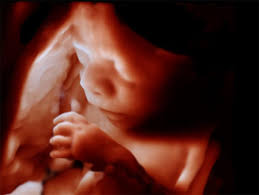
I understand well the concept of Total Depravity. I reject it. Part of reason I reject Total Depravity – I look at the picture of this newborn little boy. He’s only a few minutes old. Has he had the time or even the inclination to sin … even if he was born with a sin nature? What is the worst thing that he could have done so far – cry because he experienced pain from passing through the birth canal or is experiencing light, sound and cold for the first time and obviously not understanding anything? Even more so, children who die in the womb – would they not stand before God’s judgement – sinless and therefore innocent? So logically, the Calvinist accepts that God condemns sinless people to hell? And God is glorified by this?

Continue reading “A Newborn Grandson Undercuts Total Depravity and Unconditional Election”

Another Calvinist Response to Eph 1:4

This post is a follow-on to a previous conversation from my previous post. Maybe it’s just me. But I’m sensing that the Calvinists I interact with don’t necessarily have a good basis for believing their doctrines. In a previous post I stated that Eph 1:4 doesn’t support unconditional election. Eventually, the response from “Calvinist #1” was, sadly, “crickets.” Shortly afterwards, though, “Calvinist #2” continued the conversation:

Continue reading “Another Calvinist Response to Eph 1:4”

A Calvinist Response to Eph 1:4?

On a non-Calvinist FB forum, a Calvinist asked the question: If God allowed or permitted evil acts, the denial of the Gospel, & [election] based on divine foreknowledge, did God also decide the course of redemptive history before he created [the world]?

Another Calvinist quickly responded to the effect that many within this forum deny the Bible’s teachings (aka Doctrines of Grace). I asked for a specific example and received a litany of Bible verses in return. I inquired whether he’d like to take his first reference (Eph 1) and defend unconditional election. After a while and no response, I put forth my defense that Eph 1:4 does not support unconditional election and wrote the following:

Continue reading “A Calvinist Response to Eph 1:4?”

Christian Faith … Going … Going … Gone

It’s been nearly four years since I’ve posted anything on this blog. In a manner of speaking, things have kind of broken down with respect to my Christian faith. There’re various reasons for this. But so far as I understand, Christian faith has become rather binary wherein it’s either right or it’s wrong. I can no longer incorporate what I’ve come to understand as diametrically opposed perspectives. This post, I hope, will shed some light as to where I find myself.

Continue reading “Christian Faith … Going … Going … Gone”

Looking Ahead, Seeing Nothing

IMG_2324It has felt as though the fog on this faith-journey over the last couple of years is so thick that I can’t see ahead, behind or even to either side. I’ve lost my bearings as to where I was much less understand where I’m at now, where I’m going or even if I’m moving in any direction. I was recently asked if the effort figuring out Calvinism/Arminianism is really worth it. Wouldn’t my time be better put towards developing a deeper relationship with Jesus? Sure. I could just decide – yes, I’m firmly in camp “X”. However, the doubts and the confusion would remain if only because the logical disconnect of competing doctrines essentially using the same scriptural references to justify their respective positions is, at least to me, such a dichotomy.

Still, I recently saw this question posed on an Open Theist web site: 

  • If everything has been predetermined before all of us exist, then, would prayer help at all?

That question immediately made me think of the movie Groundhog Day in which TV weatherman Phil Connors (Bill Murray) was in some sort of time-loop and had to relive the same day numerous times until, I presume, he got it right. I don’t think it was the movie creator’s intention, but it was almost as though there was a predetermined outcome that had to be gotten right before Phil was able to move on.

There were, as one might expect, numerous responses from all perspectives of which one in particular got my attention. I’ve edited it for readability: 

I spent many long years as a Calvinist. I continually shouted at God to help me change the very hard and painful circumstances of my life. However, nothing changed. I knew it was futile anyway because God had apparently decided to leave me in those circumstances. I tried all the pat answers:

  • The C. S. Lewis option – prayer changes us, not God.
  • The faith option – if I express genuine faith – and lots of it i.e. the faith of a mustard seed, then I’ll see changes happen.
  • The Job option – I must have sin somewhere that is stopping God from hearing me.
  • The passive option – God has my best interests at heart.

However, in the end I had to accept the horrible thing that had happened was the best of all possible options. It wasn’t until I really embraced Open Theism that prayer became something dynamic and a means of genuine communication. As it was, my previous prayer life was more of an information dump wherein character X (me) protested as to why the author (God) wrote the story. And, the author (God) explained to character X (me) that it was okay if I never understood why the story was written was written as it was.

Ironically, I think this poor schlep has really hit on something. The ardent Calvinists I know are confident that no matter what happens, God is in control. Perhaps to a slightly lesser degree, these same Calvinists will claim that any and everything that happens to each and every one (elect and non-elect alike) is as a direct result of God’s sovereignty in order to enable a particular outcome that brings about greater glory to God.

If that’s true – that there’s no free will and this poor schlep converts from Calvinism to Open Theism and finds that his prayer life has become dynamic, is this poor schlep wallowing in his own misunderstanding of God’s “plan” and experiencing a sort of “false comfort” based on, perhaps, self-motive? After all, God didn’t change, right? Rather, this poor schlep’s perspective of God changed. So, is this poor schlep feeling better about his faith because he decided to identify with something which apparently was more comfortable? On the other hand, if there is free will and God isn’t sovereignly controlling each and every detail, then is this poor schlep experiencing a newfound joy and sense of freedom because he now understands or otherwise relates to God from a proper perspective?

Honestly, how is one to know?

Caption picture graciously provided by LT. More of his fabulous pictures can be found here.

Merry Calvismas

Wayne Moran PhotographyToday’s sermon was based on the familiar passage of Luke 2:8-20. Two verses in particular popped out at me (NIV) – emphasis added:

(10) But the angel said to them, “Do not be afraid. I bring you good news of great joy that will be for all the people.

(14) Glory to God in the highest, and on earth peace to men on whom his favor rests.

Certainly my faith has diminished over the last few years while trying to make sense of what I can only call the Calvinist divide. And, irrespective of my good buddy Tim, many who hold dear Calvinist doctrines have been ever gracious and patient while I try to work through myCalvinisticals”.

Yet, here’s this particular passage – and with a clear reading (at least from my perspective), there’s obviously a disconnect as to whom the Messiah came for:

– all the people (as stated in vs 10)

– those on whom [God’s] favor rests (as stated in vs 14)

Not sure why I hadn’t noticed this particular text over the past few Christmas seasons. Certainly I’ve come across these verses numerous times before. Still, in my feeble mind, it is impossible for Calvinism and Arminianism to logically coexist. Yet, here within these verses is to me a contradiction of the highest order.

And for me, the struggle continues.

I welcome your thoughts.

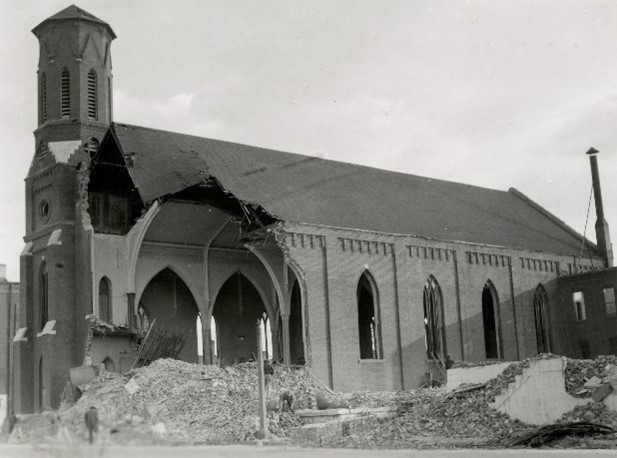
BTW – The captioned picture, I think, represents well the two doctrines of Calvinism and Arminianism moving down one’s faith path. To me, there is no intersection. Anyway, some fabulous pictures can be found at http://www.lettherebelightfineart.com/

Quantitative Analysis of Unconditional Election

An interesting blog post asks whether conditional election or unconditional election has more Biblical basis. The author goes on to state,

One of the most persistent and often divisive issues within Christianity is the debate between the doctrine of unconditional election (often called the doctrine of predestination) and the doctrine of unconditional election (often represented as the doctrine of free will).

Provided within the post is a list of verses that each camp uses to justify their respective positions. I don’t know the origin of this list nor do I believe this list is in any way complete. Still, the author wonders whether a greater number of verses (that, at least for this list) in support of unconditional election lend credence that unconditional election is indeed what the Bible teaches? I’m a numbers guy and do some quantitative analysis on the day job so this thought got my attention. 

However, as I scrolled down the list, I noticed that some verses were listed as supporting both predestination and free will. I certainly don’t think it accurate to derive “truth” from just a verse and I don’t think that is necessarily intended here. Context is everything and as such, any given verse must be read within the context of the passage. That said, if something is “truth” in one passage, then doesn’t there have to be commonality of that “truth” throughout all of the Bible?

Jesus says the truth will set me free (John 8:32). Perhaps my struggle regarding unconditional election can only mean that I don’t know the truth. Of course, preceding vs 32 is vs 31 where Jesus says if I hold to his teachings then I am really his disciple. Perhaps therein lies the issue – I’m not his disciple. Therefore, I can’t know the truth. Hence, I struggle in my faith – and not just with unconditional election. Perhaps I’m beginning to overanalyze – time to chill-out.

Anyway, I’ve come across this before – Calvinists and Arminians using the same verses and passages to to defend (or argue against) unconditional election. Romans chapter nine is perhaps the best example I know of. That the likes of John Piper and Greg Boyd have diametrically opposed perspectives of this chapter is troubling to me. But I understand that not all Christians are bothered by, what I can only call, the “variance” of Christian thought at least with respect to unconditional election.

In any event – to the question: does a greater number of verses supporting one perspective help to sway or otherwise bring about resolution within the Calvinist-Arminian argument? Probably not. But, what do I know?


Would Esther Have Been Considered a Calvinist?

Recently I pondered whether delving into the Old Testament Torah would help bring about some understanding to Calvinistic/sovereign grace issues within my own faith. Unbeknownst to me, my bride has been studying the book Esther in a women’s Bible study. She’s well aware of my consternation regarding Reformed theology in general and unconditional election in particular. She believes a sovereign God can, and does, direct the events in the lives of believers – and for that matter, non-believers as well. With her permission, I have copied her summary of the book of Esther and how this book has helped to bring about a new sense of purpose and understanding within her own life. 

Can everything that happens in the book of Esther be explained by naturally-occurring events?

    • The king can’t sleep one night and asks the archives of his kingdom to be read to him – which happened to be of the time Mordecai reported a coup against the king and was never rewarded for it.
    • The king is invited to a dinner by Esther.
    • Esther rose to be queen based on her beauty and personality. 
    • The king sees someone in the courtyard which happens to be Haman.  
    • A prideful Haman gives the king a grandiose idea of how to honor someone – the honor Haman actually wishes to have bestowed upon himself. 
    • Haman just happens to be “falling on the queen’s couch” when the king reenters the room. 
    • The king makes a decisive decision to have Haman executed. 
    • A newly built gallows had just been built by Haman which had been intended to hang Mordecai. 

Is it all just happenstance? It seems impossible that all of those events, taken together,  could randomly have lined up that way. It appears that everything was orchestrated and planned out. And none of the players could possibly have seen, understood or even imagined that each event had been specifically designed. 

Is there a lesson for us? Does God work this way in our lives? How do we know if God orchestrates circumstances in our lives today? The book of Esther teaches that God can use people to bring about events he desires – even through people who don’t acknowledge or worship him. The book of Esther also shows God’s heart and compassion for his people. God has good intentions toward us and the power to orchestrate human events in our favor. I believe God has the power to answer my prayers, the power to influence my mind and help me make wise decisions.

Did God orchestrate the approval process at Hamline so that I would enter their education program? Does God specifically want me to be a reading teacher? I still can’t answer these questions with 100% assurance. However, I think it’s much easier looking back over time at events to see a plan and that’s why it’s so evident in the book of Esther that there was a plan. We are looking back over time. No one in the story saw the plan as it was unfolding. The book of Esther teaches that God sees and cares and works on behalf of his people. May we trust in God’s good intentions and his providence over our lives. 

Romans 8:38-39 states, “For I am convinced that neither death nor life, neither angels nor demons, neither the present nor the future, nor any powers, neither height nor depth, nor anything else in all creation, will be able to separate us from the love of God that is in Christ Jesus our Lord.”

I’m not sure it really means anything, per se, but I find it interesting that I’ve never come across any Calvinistic reference pertaining to God exercising his sovereignty within the Book of Esther. Still, it’s hard to argue against the “lessons” of Esther that my better 7/8ths elaborated on in her journal. And, it’s hard to argue against those passages in scripture in which God takes an active role or against those individuals specifically called out by God – including Moses, Abraham, David, the disciples, Paul, et al. I don’t doubt that God, being God, can do as he pleases. That said, I’m not a “determinist” and as such am not convinced that God directs the actions and activities of each and every “free agent” (a philosophical term I seem to be coming across more often). Nevertheless, perhaps it is only through the long lens of time that we can understand the path on which we’ve walked and how all that we have encountered on that path has indeed, per Rom 8:28, worked together for the good of those who love God and have been called according to his purpose.