 It finally ‘hit me’ during a discussion with a Calvinist regarding unconditional election. I sensed my Calvinist friend (CF) didn’t think I was one of God’s ‘elect’. So, I asked:
Me: Do you believe that it’s possible for someone rejecting the doctrines of grace, i.e. Calvinism, to be a Christian?
CF: Sure, it’s possible. God is using Calvinists to guide everyone else to the truth. In fact, it’s not even Calvinism. It’s the gospel of Jesus Christ! Twenty years ago I was an obstinate Arminian until I tasted the sweetness of the gospel of God’s sovereign grace! God lifted me from the error of my thinking that I can by my own free will choose Him when I realized just how impossible it is for a sinner to turn to God by his own will.
Me: What I so often see is that ardent Calvinists such as yourself appear to be more in love with their doctrines than with their Savior. The TULIP doctrines are preeminent. The relationship is secondary. Right or wrong, I’m sensing the same thing with you.
Interesting, too, that you and I have in essence journeyed in direct opposite directions with regards to matters of faith. I find it curious that God brought you into Calvinism while I believe, if anything, that God removed me from Calvinism. For years, I was clueless about Calvinism until a new pastor arrives at the church we were attending. He was a nice enough guy. But I sensed a significant difference in the overall emphasis of the service and sermons. Topics related to total depravity, unconditional election and limited atonement were, well, uncomfortable. I soon found myself in significant disagreement with the new pastor – and many of the congregants, too. I left and started attending another church. So, I can’t help but wonder if God not only removed me from what I believe to be the error of Calvinism but he also gave me an abhorrence of Calvinistic doctrine? Or, maybe you think I’m a complete reprobate pretending to be a Christian and in abject ignorance running directly towards the gates of Hell?
CF: Calvinists are so in love with their savior. That’s why we always strive for his truth! We can’t separate truth and the savior. When one falls, the other falls too!
Me: Did you just make a distinction between the “truth” and the savior? The “truth” is Calvinism? So, you must therefore believe that Calvinism and faith in Christ are intrinsically intertwined?
CF: There’s no way around it. The Bible emphatically teaches this.
Me: So, by your understanding, if I hate the “truth” aka doctrines of grace, then by default, I also must hate the Savior?
CF: When the Bible says that salvation is a free gift, it means that it’s up to God to give it to whomever He wills. That’s unconditional election. We don’t deserve it. We can’t attain it.
Me: Really? Well, in no way, shape or form do I see the doctrines of Calvinism connected to Christian faith. So, in your estimation, I must therefore be a reprobate without any hope?
CF: It’s up to God who is elected. Man can’t choose. Man is spiritually dead. Man is a spiritual corpse. How, then, can salvation depend on man’s will?
At this point the conversation turned back to unconditional election and some discussion about Eph 1:4. Nothing was going to be resolved. We’d both “shot our wads”. There was, again, an impasse. In hindsight, however, I found it somewhat disappointing that my Calvinist friend didn’t ask me about a conversion experience or any aspect of my relationship (or lack thereof) with Christ. I should have drilled down on this, However, during “the heat of the discussion” that thought didn’t occur to me. If anything, however, this conversation confirms my general sense that Calvinists are more interested in their TULIP doctrines than they are with a faith-based relationship with Jesus.
To which, I can appreciate that it might be just a teeny little bit awkward for a Calvinist to tell someone, “Well, it’s too bad that God didn’t ‘elect’ you. You’re toast. And, come judgment day; well, sorry. What can I say other than God, in his infinite wisdom, decided before the foundation of the world not to include you. Well, good-bye and ‘God bless’!” That would at least be honest. But as is, Calvinists tend to dilly-dally and dance around the obvious implications of their doctrines when dealing face-to-face with someone.
So, how is the argument ever resolved other than for anyone to agree with a particular perspective – whether pro-Calvinist or anti-Calvinist? And, therein lies the problem; good-willed people in both camps having diametrically opposed perspectives are in essence deciding to agree with or disagree with doctrinal beliefs and matters of faith. Christian faith, then, subjectively distills down to a matter of one’s opinion.

 how my understanding of Eph 1:4 is significantly different from what I hear and understand Calvinists to claim.
  I recently added a post to the effect that for many, limited atonement is the lynchpin of Calvinistic doctrine. That seems to make sense from a logical perspective. However, for me, the overriding issue is unconditional election if only because of how I perceive the character and nature of God through the lens of God choosing some while intentionally not choosing others. In any event, it seemed worthwhile to look up some limited atonement verses I often see used. Interesting because as often as not, there’s not a reference to the individual per se but for a group i.e. “but also for the sins of the whole world” – or something equivalent. To me, this is indicative of God’s desire for everyone without exception or exclusion.
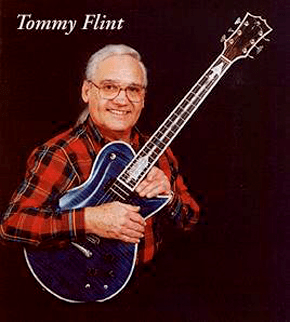 Just received news that Tommy Flint, 82, has passed away in Nashville TN. As a high tribute to his gentle and humble ways, Tommy could well be one of the best known guitarists that no one ever heard of. He performed with all the top notch players, wrote dozens of guitar instructional books and I was fortunate enough to have had Tommy as my first guitar teacher from 1967-68 when I was in junior high school. He taught out of Broadripple Music Store in Indianapolis IN. Tommy took me through three Mel Bay books over the ~2yrs I took lessons from him. He also helped my parents choose a Gibson Melody Maker that was given to me as a Christmas present. Tommy was a phenomenal teacher and helped me establish a good foundation in reading music and general guitar technique. He also taught me to play great tunes like Pipeline, Wipeout and Walk Don’t Run. Unfortunately at the time, I had no idea who Tommy was. Nor did I understand just how great of a player he was. Once in a while, though, after tuning up my guitar prior to a lesson, he’d “let loose” with some little riff. Wide eyed, I’d watch in amazement and ask him to teach me that. He’d smile and as much say something to the effect that I wasn’t quite ready for that but if I kept practicing then I’d get there soon enough.
 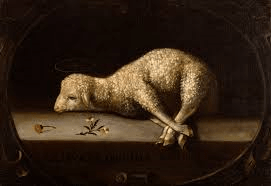 Calvinists claim something called limited atonement – the reconciliation of God and “the elect” through the sacrificial death of Christ on the cross. Calvinists deny that Christ’s atonement was for everyone. If atonement was for everyone, then everyone would be saved – or so the argument goes. And, of course, not everyone is saved so therefore Calvinists argue that Christ’s atonement was only for the elect. I don’t make that connection myself. But this makes me wonder – is atonement given to the elect person while they’re still in a reprobate condition? I mean, at what point is the elect person actually saved? Before the creation of the world? Or at the moment the elect person confesses their sin? Hence, if I follow the logic, it would seem that salvation is given to the Calvinist before any expression of faith.
  I like the insight
 Fundamental to the reservations I have regarding Reformed doctrine is the concept of unconditional election. Perhaps I’m deluding myself, but I think I can adequately refute the Calvinist’s notion of election. For instance, Eph 1:4 is a popular verse used by Calvinists.
