Predestination – A Squirrely Doctrine … and a good laugh!

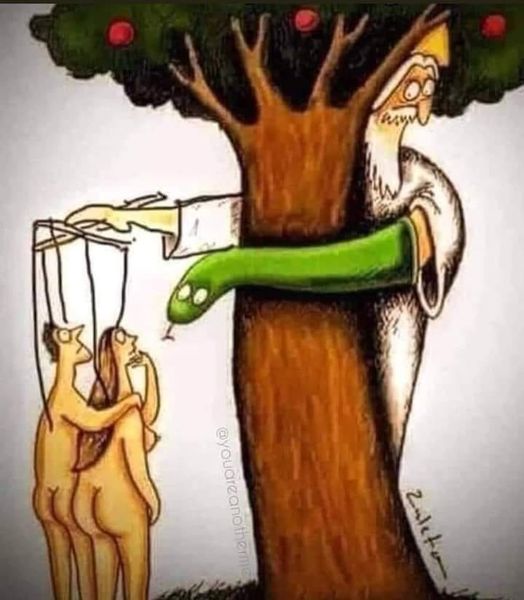
Sometimes you just have to laugh! This was sent by a friend who’s “on the other side” when we discuss such things as the Calvinist doctrine of predestination. He apparently thought I needed a good laugh. And he was right. Source unknown:

Continue reading “Predestination – A Squirrely Doctrine … and a good laugh!”

My Top 10 Difficulties with Calvinism

Calvinists obviously have their tenants and beliefs, but I sincerely doubt they understand why so many express serious disagreements with Calvinistic doctrines. After a recent encounter, and in no particular order, I cobbled together 10 difficulties that I have with Calvinist doctrines.

1st point: Many Calvinists seem to delve into the Greek language when doing Bible studies if only to ‘prove’ a point. I prefer the NIV and believe it to be a reasonable translation. The scholars who put together the NIV (or any other translation for that matter) typically have advanced degrees and have studied the language, culture and history. How can I hope to do better?

Continue reading “My Top 10 Difficulties with Calvinism”

An Unborn Child Is Most Likely Damned Through Calvinism’s Doctrine of Unconditional Election

Calvinist says – If anyone ends up in hell, it’s because they deserve to be there on account of their sins. They will be there justly/in justice. That anyone is saved from hell is a matter of mercy and grace. Grace and mercy, by definition, are not obligated. If it were obligated, then it would be justice, not mercy or grace.

My response – A significant error in your Calvinistic beliefs is that, according to your doctrine of unconditional election, God essentially chooses whom he will and conversely not save. Consider what if a child dies in the womb or is otherwise aborted. Has this child actually sinned? No! So, even if this child had a ‘sin nature’, the unborn child has not sinned. Yet if God didn’t unconditionally elect this child, then God is damning someone who is innocent of sin.

Continue reading “An Unborn Child Is Most Likely Damned Through Calvinism’s Doctrine of Unconditional Election”

A Newborn Grandson Undercuts Total Depravity and Unconditional Election

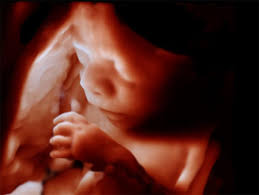
I understand well the concept of Total Depravity. I reject it. Part of reason I reject Total Depravity – I look at the picture of this newborn little boy. He’s only a few minutes old. Has he had the time or even the inclination to sin … even if he was born with a sin nature? What is the worst thing that he could have done so far – cry because he experienced pain from passing through the birth canal or is experiencing light, sound and cold for the first time and obviously not understanding anything? Even more so, children who die in the womb – would they not stand before God’s judgement – sinless and therefore innocent? So logically, the Calvinist accepts that God condemns sinless people to hell? And God is glorified by this?

Continue reading “A Newborn Grandson Undercuts Total Depravity and Unconditional Election”

Another Calvinist Response to Eph 1:4

This post is a follow-on to a previous conversation from my previous post. Maybe it’s just me. But I’m sensing that the Calvinists I interact with don’t necessarily have a good basis for believing their doctrines. In a previous post I stated that Eph 1:4 doesn’t support unconditional election. Eventually, the response from “Calvinist #1” was, sadly, “crickets.” Shortly afterwards, though, “Calvinist #2” continued the conversation:

Continue reading “Another Calvinist Response to Eph 1:4”

A Calvinist Response to Eph 1:4?

On a non-Calvinist FB forum, a Calvinist asked the question: If God allowed or permitted evil acts, the denial of the Gospel, & [election] based on divine foreknowledge, did God also decide the course of redemptive history before he created [the world]?

Another Calvinist quickly responded to the effect that many within this forum deny the Bible’s teachings (aka Doctrines of Grace). I asked for a specific example and received a litany of Bible verses in return. I inquired whether he’d like to take his first reference (Eph 1) and defend unconditional election. After a while and no response, I put forth my defense that Eph 1:4 does not support unconditional election and wrote the following:

Continue reading “A Calvinist Response to Eph 1:4?”

Determinism & God’s Nature and Character

A Calvinist recently asked me why I have such antipathy towards the Doctrines of Grace. I responded how I find the teachings of determinism and unconditional election problematic such that they affect the very nature and character of God. I elaborated how it’s beyond me that a Calvinist can realistically say, ‘Well, it may be that God has chosen you to be reprobate. But don’t feel bad. God has intentionally doomed you for his glory.’

I went on to explain that years ago, and without realizing it, I’d been attending a Calvinist church. I’d gotten involved in a men’s Bible study where one of the books we went through was Jerry Bridges’ Is God Really in Control? I read through each page and continually said to myself, “That can’t be right” or “I don’t think so!” if only because theistic determinism is (to me) so incompatible with the entirety of Scripture. Why would God see the need to give us Proverbs if he’s determining everything that will happen?

Continue reading “Determinism & God’s Nature and Character”

Christian Faith – Truth Statements – Deconstruction

I was recently corresponding with a good friend as to the deconstruction of my Christian faith. As is, this friend remains strong in his Christian faith. Using logic likely derived from a college philosophy class, he posited that when it comes to disagreements among Christians, one likely holds to one of the following positions:

1. No one knows which perspective on Christianity is correct.

2. Someone knows which perspective on Christianity is correct.

3. There is no way to know which perspective on Christianity is correct.

4. I don’t know which perspective on Christianity is correct.

5. I do know which perspective on Christianity is correct.

Continue reading “Christian Faith – Truth Statements – Deconstruction”

Compatibilism – Sounds Nicer Than Determinism

Someone stated on a Facebook forum, “Anyone who believes that man’s will is entirely free, and that he can be saved by it, does not believe the fall.” He went on, “God is in control of our thoughts, our words, and our deeds, without making us robots or puppets! We are responsible for all of it!” Lots of verses were provided to justify his beliefs. However, if anything, I found his supply of verses justifying his pronouncements to be woefully lacking. And so, perhaps against better judgement. I responded:

I suspect our respective doctrines are altogether different – especially with respect to such things as Total Depravity, Unconditional election and Limited Atonement. Our doctrines are obviously based on our respective understandings from the Bible. To which, it would seem as though God has taught you things which are significantly different from what he’s taught me. Now, why would he do that? Unless maybe, just maybe, the tenants of determinism within Calvinism are fraught with error. And on that point, I can’t imagine you disagreeing with John Calvin who has written in his Institutes of Religion:

Continue reading “Compatibilism – Sounds Nicer Than Determinism”

Challenging the Calvinist Understanding

It’s been my experience that for Calvinists to comport with their doctrines, many verses can’t simply be read ‘as is’ but instead must ‘adjusted’ so that the meaning of a given verse can better fit their orthodoxy. A friend recently indicated that Calvinist soteriology requires a repeat of Genesis 3 in which the serpent says, “That’s not really what God said.” I found this thought fascinating if only because of the inference wherein Calvinism is a lie because, according to Calvinism, God does not love everyone. Further, according to Calvinism, Jesus didn’t die for everyone. And Jesus is neither the savior nor the propitiation for the sins of the whole world. So, in no particular order, below is a table of verses that seem to be saying one thing and in which the Calvinist puts forth a different interpretation than the simple reading.

Continue reading “Challenging the Calvinist Understanding”